Quartzite vs marble sounds like a choice between beauty and durability, but that’s not really the decision. Both can be beautiful. The real question is what kind of wear you’re willing to live with, and how much visual softness or surface resilience your kitchen actually needs.
Quartzite usually gives you more everyday durability, while marble offers a quieter, classic character that many clients still prefer. This article breaks down the difference in performance, care, and visual effect, so you can choose with more clarity before you ever commit to a slab.
What Quartzite and Marble Actually Are
Quartzite and marble are both natural stone, but they begin in different places. Marble starts as limestone. Quartzite starts as sandstone. Over time, heat and pressure transform both, but not into the same kind of surface.
That difference is part of what gives each material its character. Marble has a softer, more classic presence. Quartzite tends to feel stronger and more resilient from the start.
In a kitchen, that difference becomes practical. It affects how the surface responds to acid, surface wear, and the pace of daily life.
So while the slabs may sit in the same design conversation, they do not ask the same thing of you. One is often chosen for its softness and patina. The other is often chosen for its natural movement and steadier performance.
How They Perform in Daily Use
If day-to-day performance is the priority, quartzite usually has the advantage.
Quartzite is generally more resistant to scratching and less vulnerable to etching than marble. That does not make it immune to wear, but it usually holds its surface more steadily in an active kitchen.
Marble is more sensitive by comparison. Acidic ingredients like lemon, vinegar, or tomato can leave etch marks. It can also show scratches and surface change more quickly, especially in a kitchen that is used often.
That does not make marble the wrong choice. It simply makes it a more deliberate one. Some homeowners appreciate the way it softens with time. Others would rather keep visible change to a minimum.
Both materials typically need sealing. But the larger question is not just maintenance. It is whether you want a surface that stays more composed under daily use, or one that wears more visibly and develops character along the way.
Which Material Fits the Way You Live
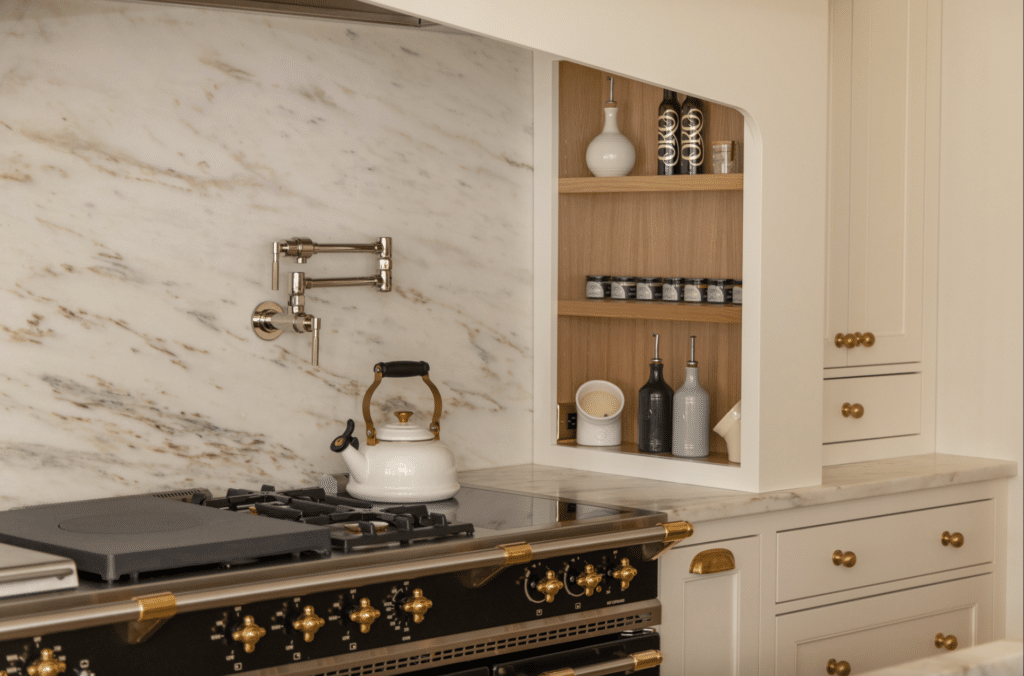
Quartzite and marble are often compared side by side, but the better choice usually comes down to how you live in the space.
Quartzite tends to suit kitchens that see regular use. If you cook often, entertain frequently, or prefer not to think too much about the surface while you are using it, quartzite usually offers more flexibility.
Marble tends to appeal to a different mindset. It is often chosen by homeowners who value the look first and are comfortable with a surface that changes over time. If you like the idea of a kitchen that develops character, marble can feel more natural.
This is also where personal tolerance comes in. Some people notice every mark. Others do not. The right material depends less on what the stone can do and more on what you are comfortable living with day after day.
What Maintenance Really Looks Like
Both quartzite and marble are natural stone, which means both require some level of care. But the type of care, and how noticeable it is, can feel very different.
Quartzite is usually more forgiving. It still benefits from sealing, but it tends to resist everyday wear more easily. Most homeowners find that it holds its appearance with less visible change over time.
Marble requires a bit more awareness. It should be sealed, and it is more sensitive to acidic spills. You may start to see subtle etching or soft marks, especially in areas that are used often.
Sealing helps in both cases, but it does not prevent everything. It slows absorption. It does not stop wear entirely.
So the real question is not whether you are willing to maintain the surface. It is how much visible change you are comfortable with as the kitchen is used.
The Difference in Visual Effect
The difference between quartzite and marble is not only about performance. It also shapes how the space feels once everything is in place.
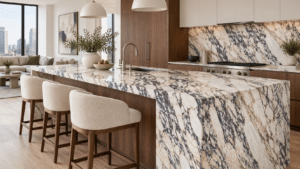
Marble tends to create a softer, quieter look. The veining often feels more fluid and understated, which can bring a sense of calm to the room.
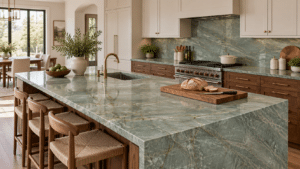
Quartzite usually has more movement and variation. Some slabs carry stronger patterning and depth, which can become a focal point in the design.
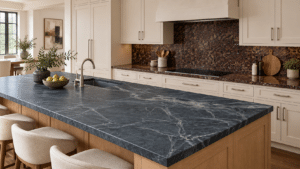
This is one of the reasons slab selection matters so much. Two pieces of quartzite can feel very different. The same is true for marble. Seeing the full slab, rather than a small sample, gives you a much clearer sense of how the material will shape the room.
Which One Makes More Sense for Your Project
For most active kitchens, quartzite is usually the safer choice. For projects where visual softness matters more than resistance to wear, marble may still be the more compelling one.
Quartzite often makes sense for homeowners who cook often, want natural stone, and prefer a surface that asks for less vigilance.
Marble appeals to a different priority. It has a quieter, more established look, and for many clients, that is exactly the point. If you are comfortable with patina and subtle wear, marble can feel more personal over time.
That is why this decision is rarely about which material is better in the abstract. It is about which one feels right for the way you live, the way you cook, and the way you want the room to age.
FAQ
What is the main difference between quartzite and marble?
The main difference is how they tend to live in a kitchen. Quartzite is usually harder and more resistant to everyday wear. Marble is softer and more likely to show etching, scratches, and patina over time.
Is quartzite more durable than marble?
In most cases, yes. Quartzite is generally the more durable option, which is why it is often selected for kitchens that see more daily use.
Does quartzite need sealing?
Yes. Quartzite typically still needs sealing. It is a durable natural stone, but it still benefits from the right care.
Does marble always stain or etch?
Not always, but it is more vulnerable to both. Marble can etch from acidic ingredients and may show surface change sooner than quartzite.
Does quartzite etch like marble?
Quartzite is much less likely to etch than marble. Marble reacts more easily to acids, which is why etching is more common with it.
Is marble too delicate for a kitchen?
Not necessarily. Many homeowners use marble in kitchens successfully. It just requires a level of comfort with wear and a willingness to accept some surface change over time.
Which one is easier to maintain over time?
Quartzite is usually easier to maintain because it tends to show less visible wear. Marble requires more awareness, especially around spills and daily use.
Which one works better for a kitchen island?
Both can work well. Quartzite is often chosen for islands that see heavy use, while marble is often chosen when the island is more about visual impact.
Can the slab look different in person than it does online?
Yes. Natural stone can vary significantly. Lighting, scale, and full slab movement are difficult to judge from photos, which is why in-person selection is important.
See the Difference in Person
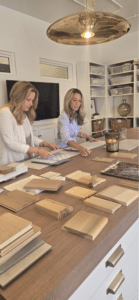
Quartzite and marble make more sense when you see the slabs in person. Movement, tone, and scale are easier to read that way, and so is how each material will come together in your space.
At Precision Stone Designs, selection is not limited to choosing a material category. You can review full slabs, understand how the veining will flow, and see how the surface will be laid out before fabrication begins.
To compare quartzite and marble side by side, reserve a personalized showroom visit