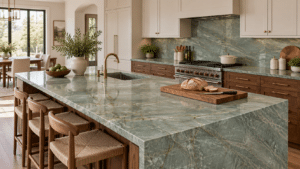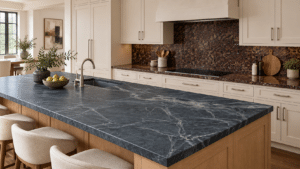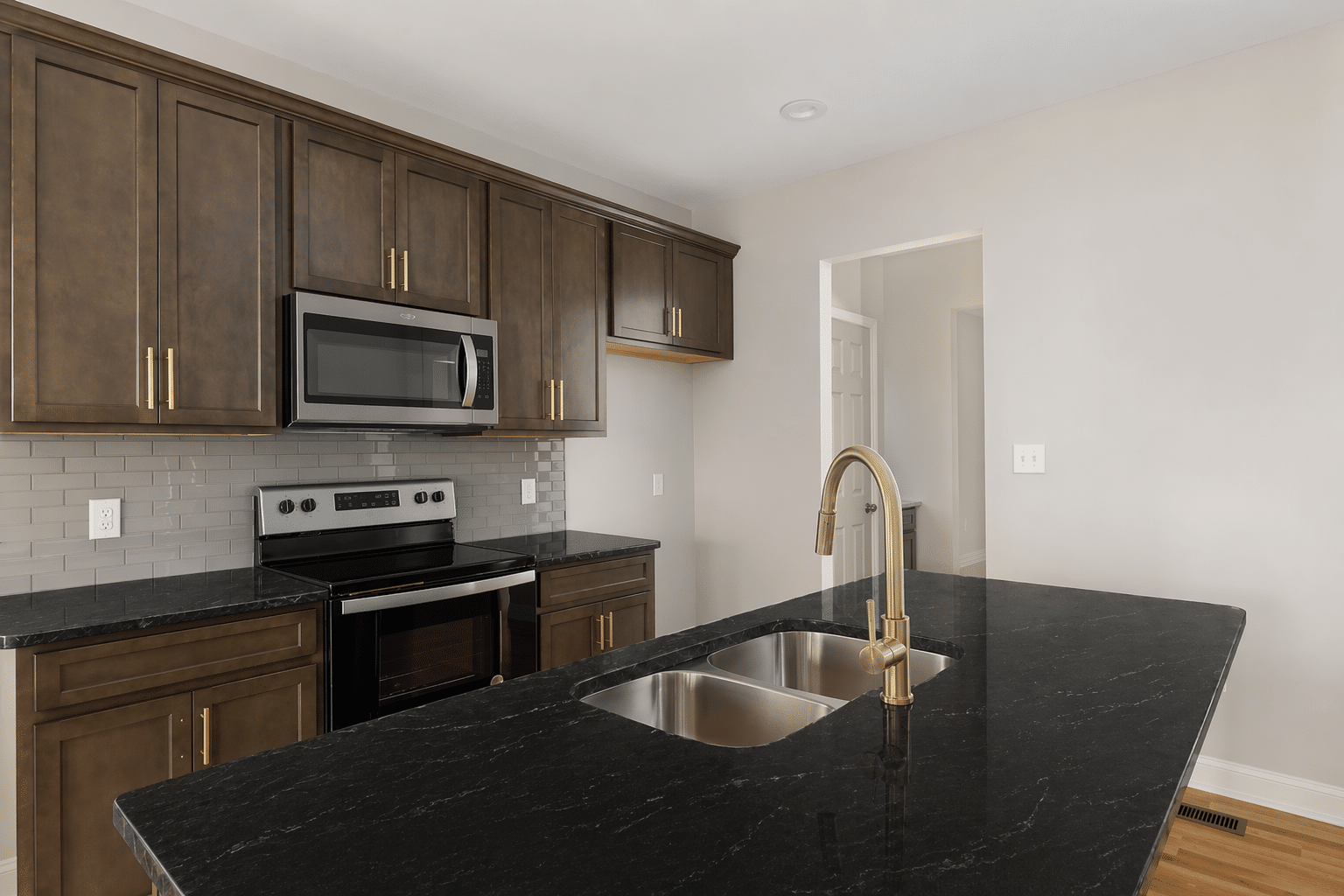
Choosing a natural stone countertop is not the hard part. The hard part is choosing one you won’t regret after two years of cooking, heat, and daily use. Granite sits near the top of nearly every durability comparison, but the material still has conditions: sealing schedules, edge vulnerability, and how fabrication quality affects the finished result.
At Precision Stone Design, we’ve guided Chicagoland homeowners through this exact decision since 2010. For homeowners evaluating granite alongside quartzite or marble, this post covers what durability actually means for granite, where the limits are, and how to make a selection you can trust before the slab is ever cut.
What “Durable” Really Means with Granite Countertops
Granite countertops earn their durability reputation for a specific reason: the stone is igneous, formed under intense heat and pressure, which makes it one of the hardest natural materials you can put in a kitchen.
But hardness and durability are not the same thing.
Hardness measures how well a surface resists scratching. Durability covers more ground. It includes how the stone holds up against heat, staining, impact, and daily kitchen use over time.
Granite scores well on all of them. It won’t scratch from a knife or a pan. It won’t etch when an acidic liquid hits it the way marble would. A properly sealed slab resists staining from oils, wine, and most common kitchen spills.
What “durable” actually looks like in a kitchen is this: a surface that doesn’t require constant attention, holds its finish for years, and stays consistent in appearance without dramatic changes over time. Granite delivers that in most kitchens without much negotiation.
Where Granite Needs a Little More Attention
The flat surface is actually the easy part. Granite holds up well under normal kitchen use, but treating it as completely indestructible leads to the kind of small mistakes that compound over time.
Here is where the material still has limits.
Sealing is not optional.
Granite is porous. Without a penetrating sealer applied at installation and reapplied on schedule, the stone will absorb oils, wine, and cooking residue. Most granite slabs need resealing every one to two years in an active kitchen. Lighter-colored stones and more porous slabs may need it annually. The maintenance ask is low. It just cannot be zero.
Edges and cutouts carry more risk than the field.
Corners, sink cutouts, and edge profiles are where chips and cracks tend to happen. This is not a material failure. It is a fabrication and installation reality. Laser templating and planned edge profiles eliminate most of the guesswork around cutout placement. The risk doesn’t disappear entirely, but it becomes predictable and manageable.
Heat is more nuanced than most buyers expect.
Granite handles moderate heat well. A pot with liquid, a warm pan set down briefly. Hot oil at high heat is a different situation. It can stain the surface, particularly on darker slabs with less quartz content. Trivets are still a reasonable habit, not an overreaction.
None of these are reasons to avoid granite. They are reasons to go in with accurate expectations rather than an oversimplified picture.
How Chicago Homeowners Should Decide Whether Granite Is the Right Fit
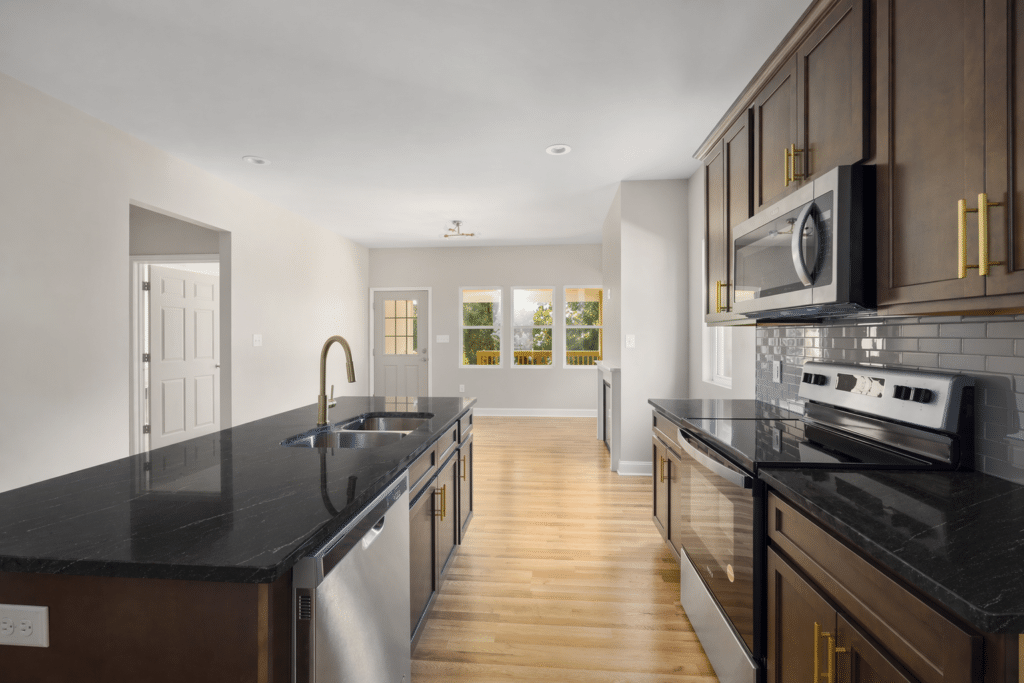
Granite countertops work well in most kitchens. The question is whether they work well for your kitchen and how you use it.
Three things worth thinking through before you commit:
- How much cooking actually happens in the space. A kitchen that sees daily high-heat cooking, heavy oil use, or frequent acidic spills puts more demand on any surface. Granite handles that environment well with proper sealing and reasonable habits. A kitchen used lightly has even less to worry about.
- How it compares to your other options. Granite vs marble durability is not a close comparison. Marble etches from acids and scratches more easily. Granite does not. If you want natural stone movement without constant maintenance, granite is the stronger everyday choice. Quartzite is worth considering if you want similar performance with a different aesthetic range.
- How fabrication affects the finished result. The slab matters. So does how it is cut, where seams are placed, and how cutouts are handled. Two kitchens with the same granite can look and perform very differently depending on who did the work. For Chicago homeowners evaluating natural stone, the provider decision carries as much weight as the material decision. Precision Stone Design’s digital layout approval process lets you review seam placement and slab orientation before fabrication begins, so there are no surprises in the finished surface.
Any one of these factors can shift which material is actually the right fit for your project.
Selecting the right slab is one part of the process. Reviewing the layout before fabrication begins is where the real control lives.
Frequently Asked Questions
Are granite countertops durable enough for a busy kitchen?
Yes. Granite is one of the most durable natural surfaces available for kitchen use. It resists scratching, won’t etch from acidic spills the way marble does, and holds its finish well under daily use. The main requirements are periodic sealing and reasonable care around heat and edges.
Can granite chip or crack?
The flat surface is highly resistant to chipping and cracking under normal use. The more vulnerable points are edges, corners, and sink cutouts, where the stone is thinner and stress concentrates. Laser templating and planned edge profiles eliminate most of the guesswork around cutout placement. The risk doesn’t disappear entirely, but it becomes predictable and manageable with the right fabrication process.
Do granite countertops need sealing?
Yes. Granite is porous and requires a penetrating sealer to resist staining from oils, wine, and kitchen liquids. Most slabs need resealing every one to two years depending on use and the specific stone. Lighter-colored or more porous slabs may need it annually. It is a low-effort maintenance step, but it cannot be skipped entirely.
Can you put hot pans on granite?
Granite tolerates moderate heat well, including warm pans and cookware with liquid. Direct contact from hot oil at high heat or a pan pulled straight from a high-heat burner is a different situation and can cause staining, particularly on darker slabs. Trivets are a reasonable precaution.
Is granite better than marble for durability?
For kitchen use, yes. Granite vs marble durability comes down to one key difference: marble is calcite-based and etches when exposed to acids like lemon juice or vinegar. Granite does not etch. It also scratches less easily. For a kitchen that gets real use, granite is the more forgiving natural stone.
Choosing the Right Stone Starts Before the Slab Is Cut
Granite is a strong choice for most Chicago kitchens. It resists scratching, won’t etch, and holds its finish for years with basic sealing and reasonable habits. The limits are real but manageable. Where homeowners tend to get the best result is when material selection and fabrication planning happen together, not separately.
If you’re comparing granite alongside quartzite or other natural stone options, schedule a showroom visit to review slabs in person and walk through the layout before anything is committed to cut. You can also explore our full material collection to get started.