
Katherine Lauren Design
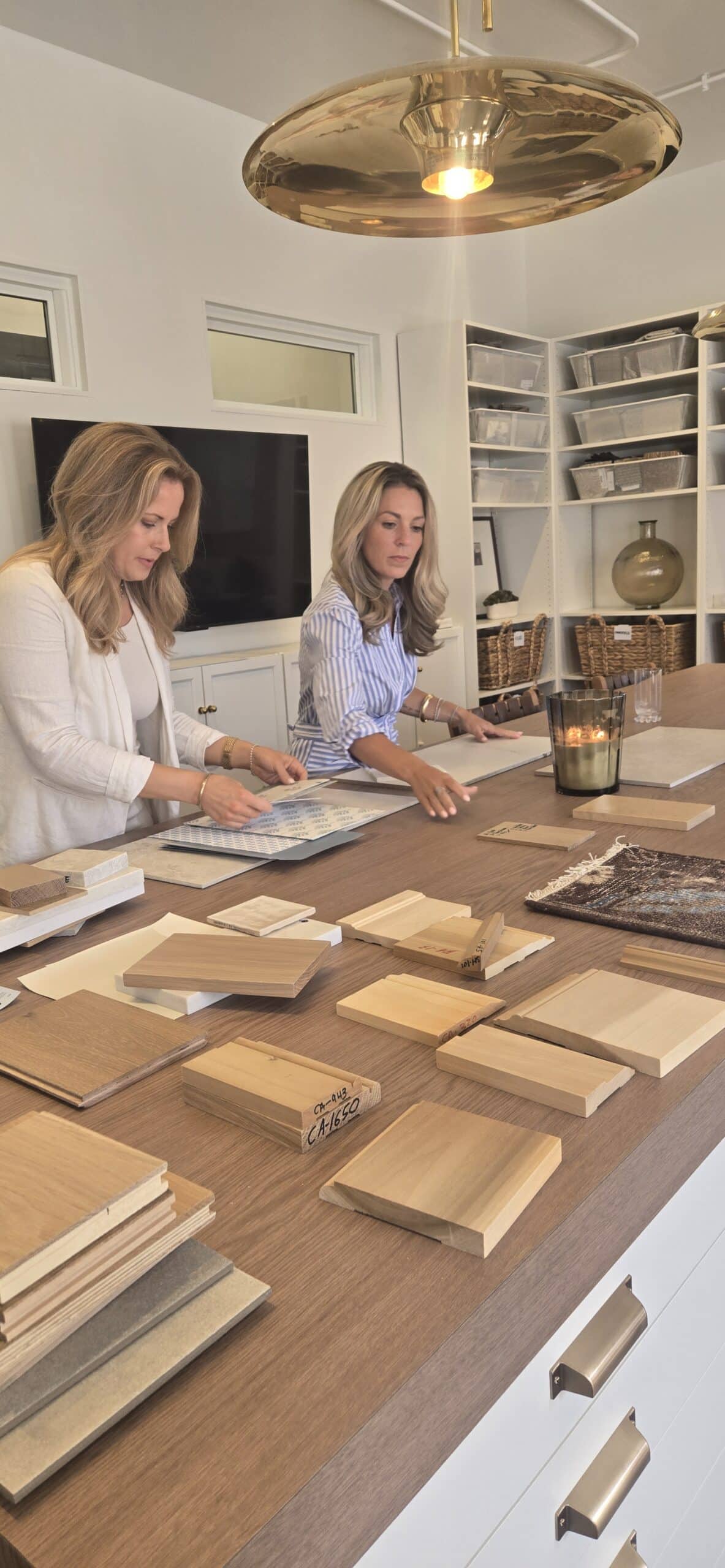
Better Together: Friendship, Collaboration and Great Design
Some partnerships begin with a business plan. Katherine Lauren Design began with a friendship.
Katie and Lauren met in college, became roommates, and built a friendship around shared interests, a very similar sense of humor—and enough differences to keep things interesting. Years later, those differences have become one of the strengths of their design practice.
Katie credits Lauren with teaching her not to overthink or overcomplicate the process. Lauren says Katie has taught her to slow down and pay closer attention to the details. One pushes toward simplicity and efficiency; the other may push the design one step further. Together, they’ve found a balance that makes each of them better.
It Starts With How You Live
When Katie and Lauren walk into a space, they notice flow—how the rooms connect, how the kitchen functions, where things naturally land and how people actually move through their home.
And sometimes, the homeowner can’t tell them exactly what needs to change.
Katie estimates that more than half of their clients don’t really know what isn’t working. They simply know that something feels cluttered, overwhelming or inefficient. That’s where a designer’s eye—and a lot of careful observation and questions—can uncover problems the homeowner may not have even recognized.
The goal is not simply to make a space more beautiful. It’s to make the home work better for the people living there.
Giving Clients Something They Don’t Have Enough Of: Time
One of the biggest benefits Katie and Lauren see in full-service design is also one of the most practical: time.
A major renovation or new build can require hundreds of hours of design, sourcing, coordination, decision-making and problem-solving. Katie and Lauren may invest 300 hours or more in a project while requiring only about 10–20 hours of their client’s time.
Instead of the homeowner managing contractors, visiting stone warehouses and showrooms, coordinating installers and troubleshooting every inevitable hiccup, the Katherine Lauren Design team manages the process.
The client gets to participate in the parts that matter most—without having to manage all the details that make the finished project possible.
Two Brains Really Are Better Than One
Their friendship plays a role here, too. Katie and Lauren know each other well enough to challenge an idea without challenging the relationship.
Both remain involved as lead designers on their projects. One idea sparks another. One may push for an unexpected material or detail; the other may bring the conversation back to budget, function or execution.
“We always say two brains are better than one,” Katie explained.
And that collaborative philosophy extends to the trade partners they choose. They value professionals who share their expertise, answer questions, teach them something new and, when the unexpected happens, help solve the problem.
AI Is a Tool—Not the Designer
Katie and Lauren have also found a very specific place for AI in their design process: communicating a quick idea.
They might use it during a meeting to help a client visualize the general feel of a particular stone or material in a room. But they don’t turn to AI to design the room, create the kitchen layout or produce the critical documents a project depends upon.
The creative thinking, technical knowledge and understanding of how that particular client lives still come from the designers.
The Power of Partnership
Perhaps that’s what connects all of it: good design is collaborative.
It’s two longtime friends bringing different strengths to the same problem. It’s designers learning how a family really lives. It’s clients trusting professionals to manage hundreds of details on their behalf. And it’s knowledgeable trade partners bringing their own expertise to the table.
That’s a philosophy we appreciate at Precision Stone Design, too. The best projects aren’t created by one person. They’re the result of talented people sharing what they know, solving problems together and creating something better than any one of them could have created alone.