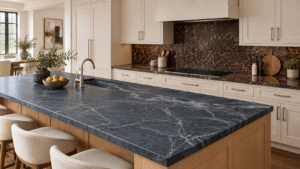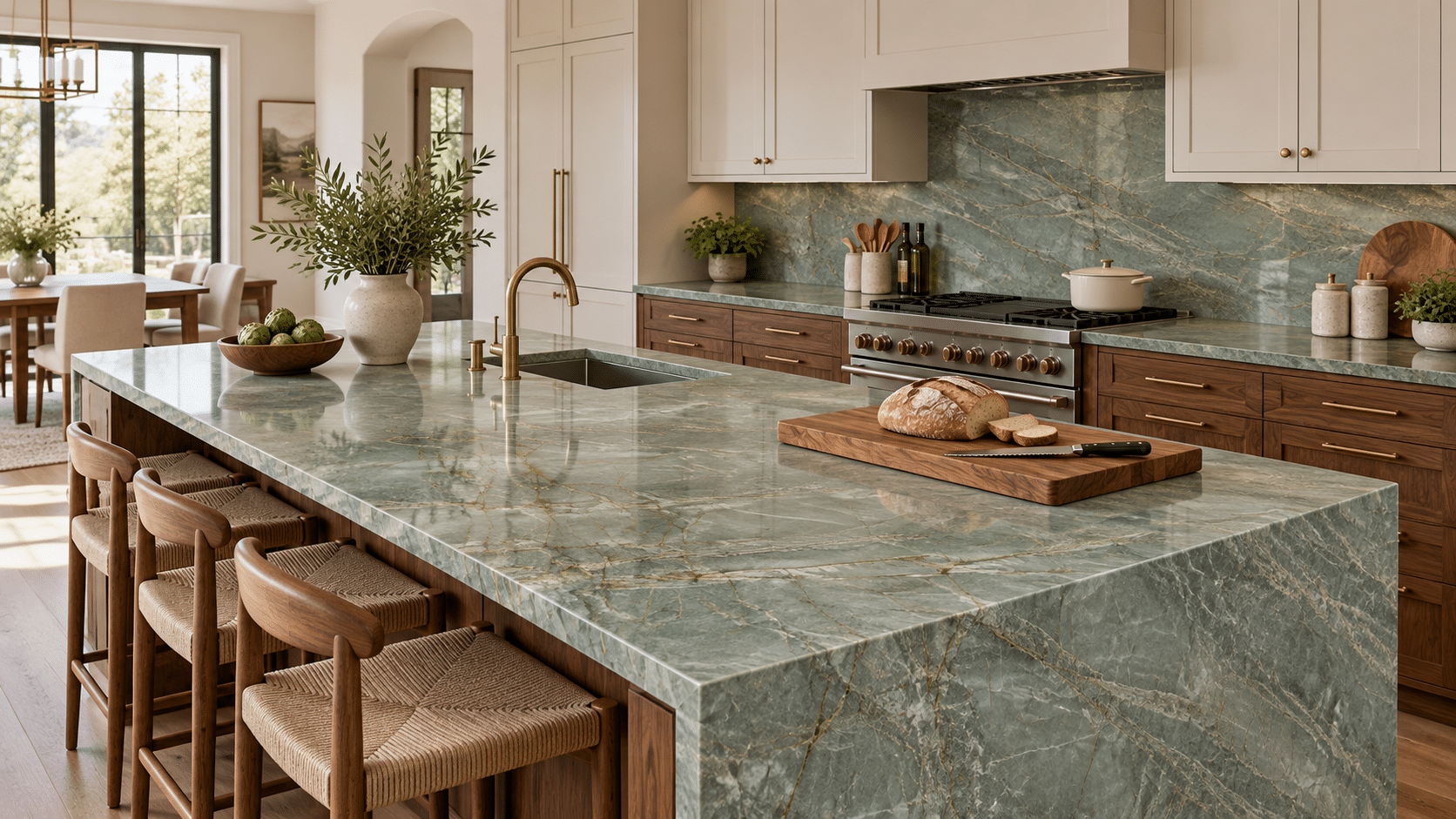
Genuine quartzite resists everyday scratching well. Its quartz-rich structure gives it the hardness that makes it appealing for kitchens where natural movement needs to stand up to regular use.
Quartzite scratch resistance does have limits, and a visible line doesn’t always mean the stone itself has scratched. Knowing the difference helps you avoid the wrong treatment. Here’s what hardness tells you, what a surface mark can reveal, and how to protect the finish you chose.
Quartzite Scratch Resistance: What Hardness Tells You
Quartzite’s abundant quartz gives it strong resistance to ordinary kitchen scratching. That makes it a strong choice when you want natural veining on a working countertop. It is not scratch-proof, and its hardness does not guarantee that every feature of the finished surface will respond identically.
Quartzite forms when sandstone changes under heat and pressure. Its quartz-rich structure explains its scratch resistance. Mineral quartz measures seven on the Mohs hardness scale, which ranks how readily one mineral scratches another.
That number describes the mineral. It does not assign a uniform rating to every vein, filled area, or surface treatment on a countertop.
Hardness also differs from resistance to impact. A stone can resist a knife mark yet chip at an edge when a heavy object strikes it. Cutouts and narrow sections deserve care even when the broad countertop surface holds up well to daily use.
For buyers drawn to marble’s movement, how quartzite and marble perform in daily use is a useful comparison. Genuine quartzite generally offers stronger scratch resistance than marble. The decision still belongs to the actual slab and finish you are considering, especially when a trade name leaves the material’s identity unclear.
A Visible Line Is Not Always a Scratch in the Quartzite

A gray line after moving a pan can look alarming on a pale countertop. It may be metal left on the surface rather than stone removed from it. Adding an abrasive cleaner before you know the cause can turn a manageable mark into a finish problem.
These clues help describe what you see:
- A gray streak: A softer metal may have transferred onto the harder stone. The color alone does not prove it.
- A groove or missing material: This may indicate damage to the stone or a filled area. It needs closer assessment.
- A dull patch: The finish, a treatment, or a mineral in the stone may have changed. It is different from a simple line.
- A line within the pattern: A natural vein or fissure can become more noticeable under different light. Compare earlier photos if you have them.
Clean with the product approved for your installation, then dry the area. If the mark remains, photograph it in daylight and ask your fabricator to review it before attempting a repair.
Material identity matters here. Some stones sold as “soft quartzite” contain minerals that behave more like marble. Ordinary kitchen acids should not etch quartz itself, but other minerals or treatments can respond differently.
Quartzite also differs from engineered quartz. Our explanation of what engineered quartz is made of separates the names. Neither a label nor a photograph alone can diagnose a persistent mark.
Protect the Surface Without Over-Treating It
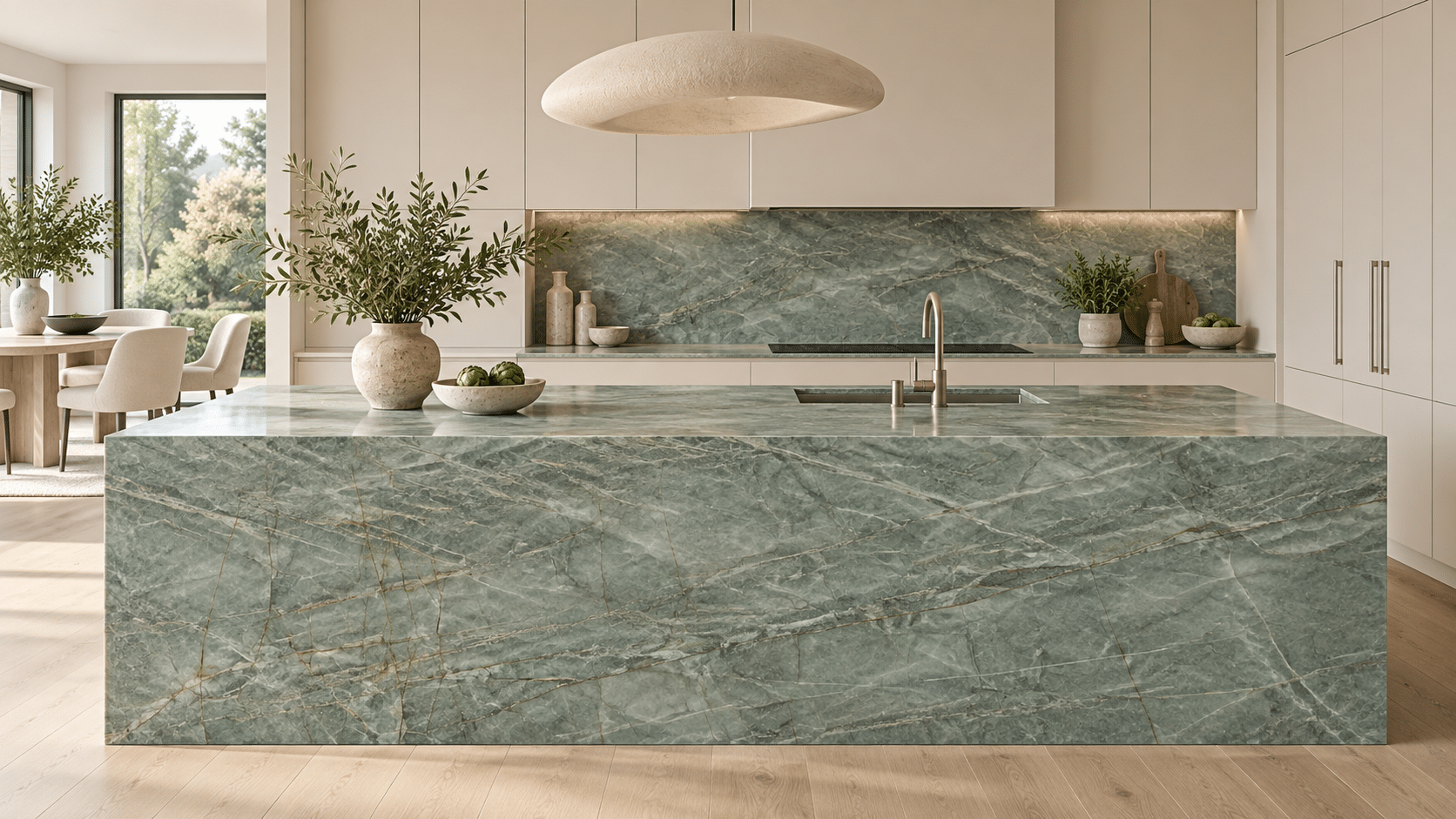
Quartzite’s scratch resistance lets you use the kitchen with confidence. A few habits protect the finish without turning the countertop into something you have to avoid touching.
Use a cutting board for food preparation. It gives you a stable working area and protects your knife edges as well as the countertop. Lift heavy cookware and small appliances instead of dragging their bases across the surface.
Clear loose grit before wiping. Abrasive particles trapped under a cloth or object can do more harm than the object itself. Use a soft cloth and a stone-safe, nonabrasive cleaner approved for your installation.
Sealing solves a separate problem. A penetrating sealer reduces liquid absorption; it does not increase mineral hardness or stop scratches. Some quartzite absorbs more readily than other quartzite, so care should follow the selected stone rather than a blanket annual schedule.
Our material-specific care guidance is a starting point for daily cleaning. If a mark persists, ask about it before adding stronger products. Sanding or polishing a small spot can change the sheen enough to make the repair more noticeable than the original line.
Review the Quartzite Slab With Its Finish and Care in Mind
Choose quartzite for natural movement you can enjoy in a working room. Review the actual slab and ask how to care for its finish before fabrication begins.
Bring your plans to our Elk Grove Village showroom for your Chicagoland project. We can discuss how you’ll use the stone and review the layout around those needs.
Request a private consultation to discuss your quartzite selection and finish with our team.
Frequently Asked Questions
Can You Cut Directly on Quartzite Countertops?
Keep food preparation on a cutting board, even with quartzite’s strong scratch resistance. Cutting directly on a hard stone can damage a knife edge, and the finished countertop may include minerals or filled areas that respond differently. A board also gives you a controlled place for food preparation and cleanup. Strong scratch resistance is a reason quartzite works well in a kitchen, not a reason to discard useful habits. Choose a board with a clean underside and lift it when moving it across the counter.
Is Quartzite Harder Than Granite?
Genuine quartzite is rich in quartz, which measures seven on the Mohs mineral hardness scale. Granite contains a mix of minerals, including quartz and feldspar, with different hardness levels. Quartzite can therefore offer stronger scratch resistance in some comparisons, but the names alone do not give every slab a fixed ranking. Neither material’s hardness measures its resistance to every impact or edge chip. Compare the actual stone and finish, then consider the kinds of wear your kitchen is likely to see.
Does Sealing Make Quartzite More Scratch-Resistant?
No. A penetrating sealer helps reduce liquid absorption and the risk of staining. It does not harden the minerals in quartzite or create a scratch-proof surface. If a countertop looks marked, applying more sealer will not repair a groove or restore a changed finish. Follow the care guidance for the selected stone and installation, including any recommended assessment of absorption. Use boards and keep abrasive grit off the surface for scratch prevention. Those habits address physical wear; sealing addresses how liquids enter the stone.
Why Does My Quartzite Look Scratched?
A visible mark may be transferred metal, physical abrasion, a change in a surface treatment, or damage to the stone. A natural line may also become easier to see as lighting changes. If a stone sold as quartzite reacts unexpectedly, its mineral composition may need review. Start with approved cleaning, dry the surface, and photograph a persistent mark for your fabricator. Avoid testing an installed countertop with a knife or acid. Identifying the cause first helps you choose a treatment that suits the actual surface.