Quartz countertops are not pulled from the earth as one solid slab. They are designed from natural quartz minerals, resin, pigments, and binders, then formed into a durable engineered surface.
That is why quartz can offer a refined level of color consistency, a non-porous finish, and a clean look that stays composed across a kitchen or bath. The distinction matters. Quartz is not quartzite. This guide explains what quartz is made of, why each ingredient matters, and how the surface works in everyday spaces.
What Quartz Countertops Are Made Of
A quartz slab is a composition. Each part has a role, and that is what makes the surface behave the way it does.
- Quartz minerals give the slab its structure and strength. This is the stone-based part of the surface.
- Resin binds those minerals together and helps create the non-porous finish that makes quartz easy to care for.
- Pigments shape the color, pattern, and movement, from soft whites to bolder stone-inspired designs.
- Additional binders or additives help create consistency across the finished slab.
That mix is the reason quartz feels so orderly. The surface is not trying to match the unpredictability of natural stone. It is chosen when the design calls for a more predictable look, simpler maintenance, and a surface that can hold its place quietly in the room.
How Quartz Countertops Are Manufactured
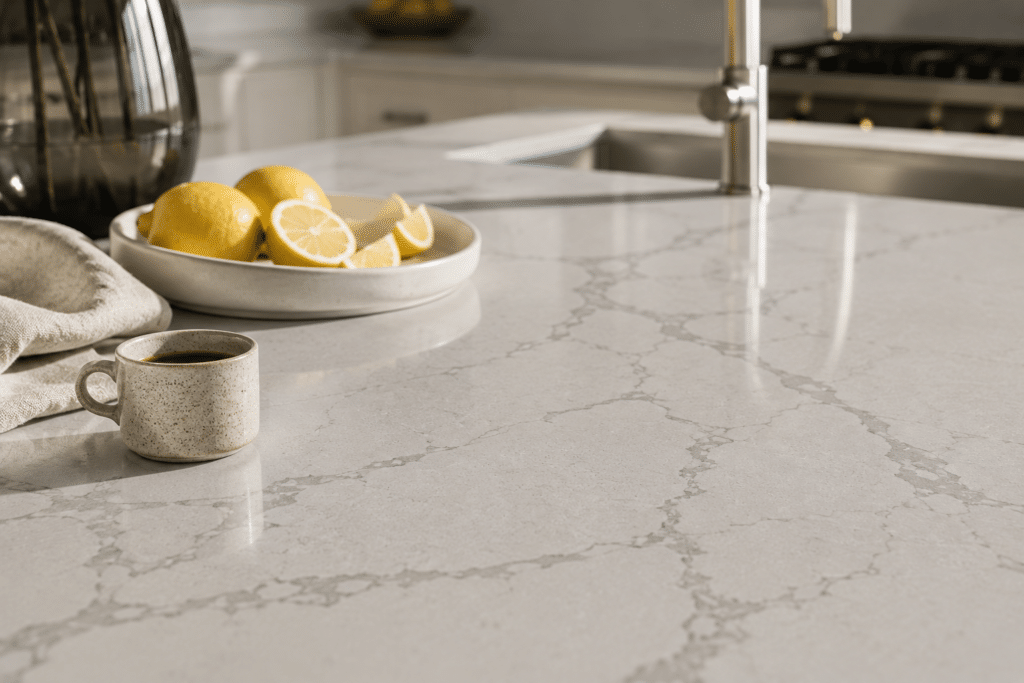
The simplest way to understand quartz countertops is to think of them as designed slabs, not quarried slabs. Natural quartz minerals are taken from the earth, then crushed into smaller pieces. Those pieces are blended with resin, pigments, and binders until the mix can be shaped into a full surface.
From there, the material is pressed into slabs. Heat and pressure help the ingredients bond together, creating a dense, non-porous surface. After curing, the slab is finished, polished, and prepared for fabrication.
That is why quartz can offer a more consistent look than natural stone. The color, movement, and pattern are guided during manufacturing instead of being formed entirely by geology.
For a homeowner or designer, this matters because quartz gives you more visual control. You can choose a surface that feels calm, bold, warm, bright, or stone-inspired with less variation from slab to slab.
How Quartz Countertops Work in Real Kitchens
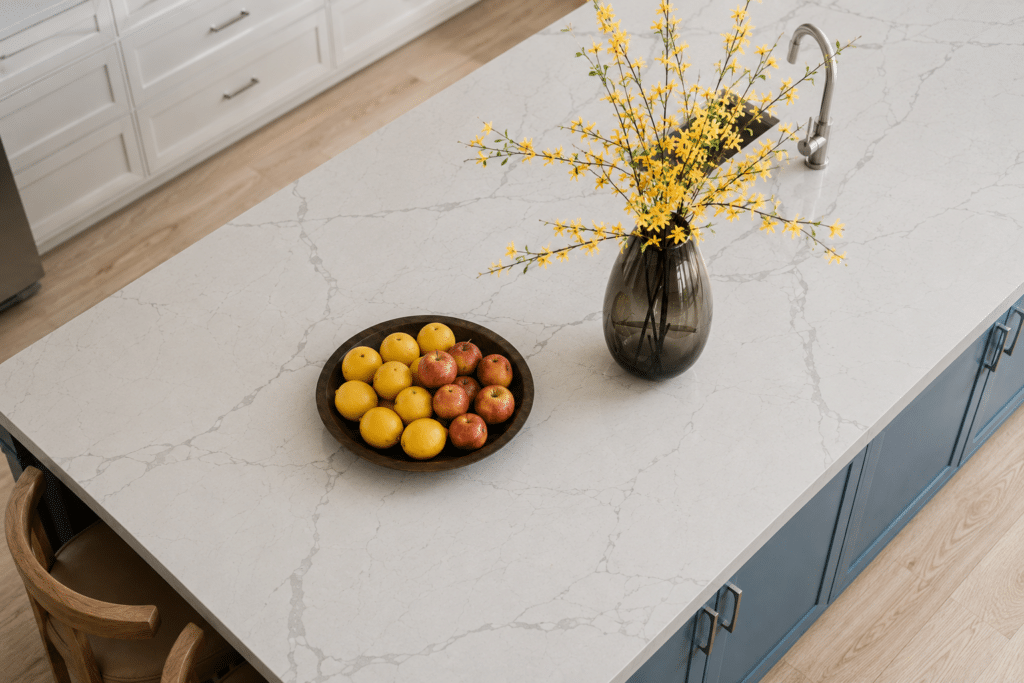
Quartz countertops are often chosen for kitchens because they offer a composed look with practical daily care. The surface is non-porous, which means spills stay closer to the surface instead of soaking in quickly. For a busy kitchen, that can make cleanup feel more straightforward.
Quartz also does not need sealing. That is one of the main reasons homeowners compare it against natural stone. If you want a surface that feels refined but does not require ongoing sealing, quartz can make sense.
Still, it has limits.
- Very high heat can damage the surface because quartz contains resin.
- Hot pans should be placed on a trivet, not directly on the counter.
- Quartz is better suited for indoor kitchens than outdoor spaces.
- Direct sun can affect the color over time.
In the right kitchen, quartz gives you clarity: a consistent surface, simple upkeep, and a design that stays visually calm.
Quartz vs. Natural Stone: What Buyers Should Understand
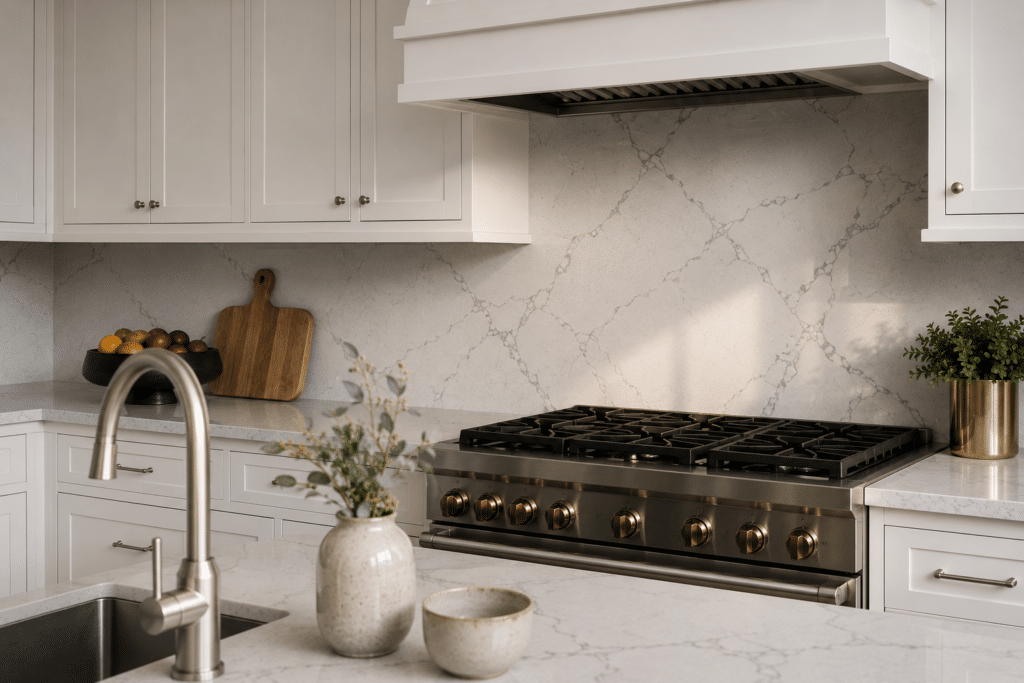
The biggest difference is simple: quartz countertops are designed. Natural stone is selected.
With quartz, the color, pattern, and movement are created during manufacturing. With natural stone, those qualities come from the slab itself. That is why quartz can feel more predictable, while quartzite, granite, marble, and soapstone often feel more singular.
Here is the practical difference:
- Choose quartzite or granite if you want natural stone with strong everyday durability.
- Choose quartz if you want consistency, stain resistance, and no sealing.
- Choose marble if you want soft movement and are comfortable with etching and care.
- Choose porcelain if you want a thin, modern surface with strong heat and UV resistance.
- Choose soapstone if you like a surface that darkens and develops patina over time.
Neither direction is automatically better. It depends on what you want the surface to do visually and how much natural variation you want to live with every day.
Quartz gives you control. Natural stone gives you individuality. The right choice is the one that supports the design intent and the way the space will be used.
How Precision Stone Design Helps You Compare Quartz Thoughtfully
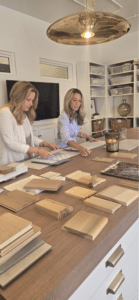
Choosing quartz countertops is easier when you can compare the surface against the way you actually live, cook, clean, and design. A sample can show color. A showroom visit can show scale, finish, movement, and how the material reads beside other selections.
At Precision Stone Design, the conversation does not have to start with a final decision. You can review quartzite, granite, quartz, marble, porcelain, soapstone, and semi-precious stone to understand what each surface does well.
That comparison helps clarify questions like:
- Do you want consistency or natural variation?
- Is low maintenance more important than one-of-one movement?
- Will the surface be used in a busy kitchen, a bath, or a lower-traffic space?
- Does the design call for quiet control or stronger visual character?
If quartz feels like the right direction, the next step is to see it in person. Reserve your showroom experience to compare materials, review finish and color options, and move forward with a surface that supports your design intent.
FAQs About What Quartz Countertops Are Made Of
What are quartz countertops made of?
Quartz countertops are made from natural quartz minerals mixed with resin, pigments, and binders. The quartz gives the slab structure. The resin helps hold the surface together. Pigments create the color and pattern.
That blend is pressed, cured, and finished into a dense engineered surface. It is not the same as quartzite, which is a natural stone formed by the earth and cut into slabs.
Are quartz countertops natural stone?
No. Quartz countertops contain natural quartz minerals, but the finished slab is engineered. That means the surface is manufactured rather than quarried as one solid piece of stone.
This is why quartz often has a more consistent appearance than natural stone. If you want a surface with controlled color and simpler care, quartz may be a good fit. If you want natural variation, quartzite, granite, marble, or soapstone may feel more aligned.
Do quartz countertops need to be sealed?
No. Quartz countertops do not need sealing because the surface is non-porous. Spills stay closer to the surface instead of absorbing quickly, which makes daily cleaning easier.
That is one reason many homeowners choose quartz for kitchens and baths. It offers a refined look without the sealing routine that some natural stones require.
What is the difference between quartz and quartzite?
Quartz is an engineered surface made with quartz minerals, resin, pigments, and binders. Quartzite is a natural stone that forms under heat and pressure, then is cut into slabs.
The difference matters. Quartz gives you visual control and low maintenance. Quartzite gives you natural movement, strong durability, and a more one-of-one slab appearance.
Where can I compare quartz countertops in the Chicagoland area?
Precision Stone Design helps homeowners, designers, and builders compare quartz countertops at its Elk Grove Village showroom by appointment. You can review quartzite, granite, quartz, marble, porcelain, soapstone, and semi-precious stone to understand how each material looks and feels in person.
For projects across Chicagoland, that in-person comparison can make the choice clearer before fabrication begins.