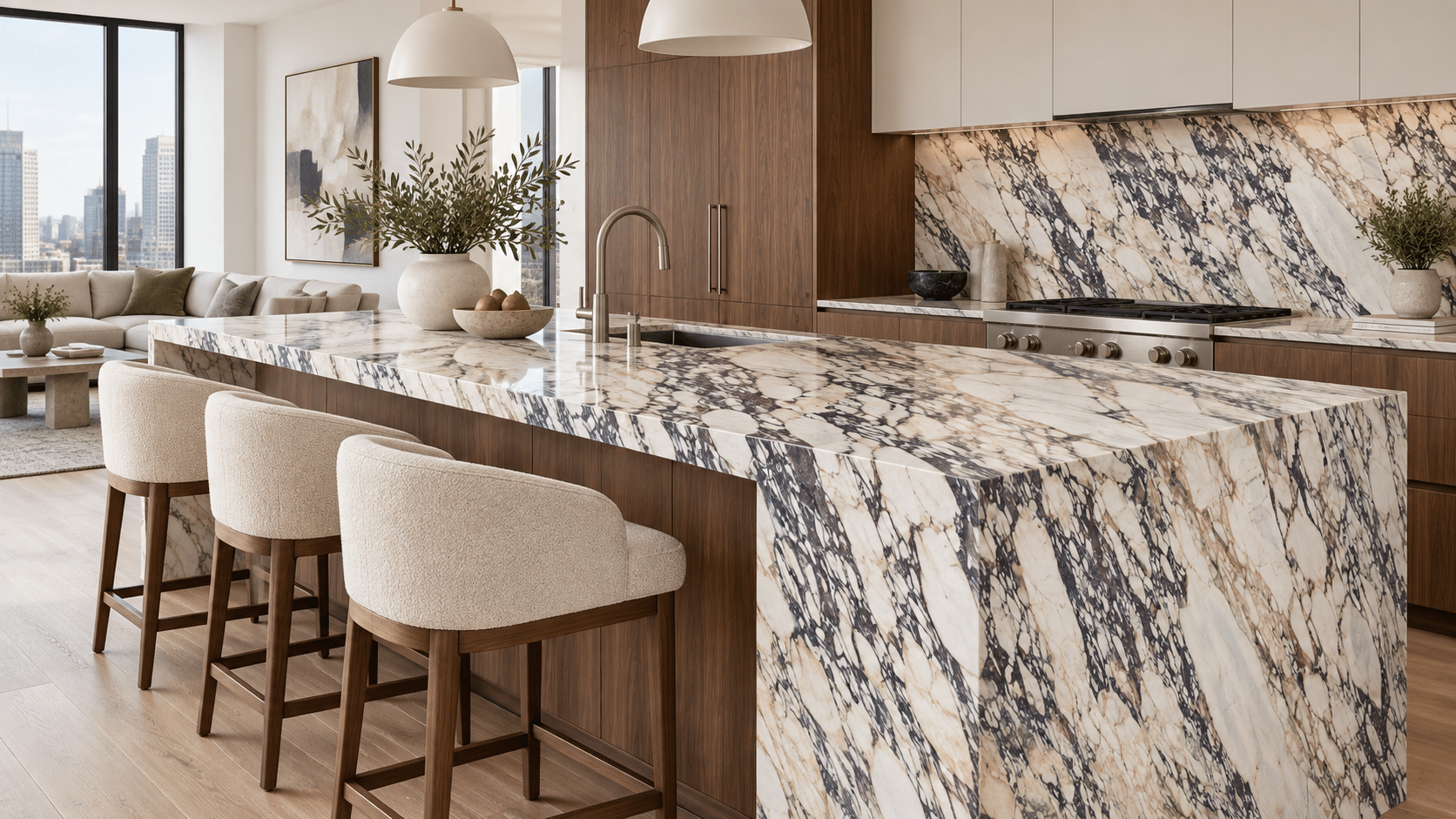
Carrara, Calacatta, and Statuario are familiar types of marble countertops for a reason. Their backgrounds and veining can set very different tones in the same room. Danby, Arabescato, and Calacatta Viola give you other directions worth exploring.
The name helps narrow your search, but the full slab decides how the surface will look. Compare these options against your layout and the care you’re comfortable giving them. The choice should suit daily life as well as the design.
Types of Marble Countertops to Include in Your Shortlist
Start with the movement you want to see across the room. These marble names help organize that choice, but each slab has its own background tone and pattern.
Carrara
Carrara often has a soft white or blue-gray background with finer, feathery gray veins. It suits a room where the stone should work quietly beside cabinetry. Review the full slab for darker clusters that a small sample may leave out, particularly if you want a calm island surface.
Calacatta
Calacatta commonly brings a brighter white background and bolder gray or gold movement. A broad vein can give an island a clear focal point. Look at where that vein will fall around the sink and along the visible edge before deciding that the slab suits your layout.
Statuario
Statuario often pairs a bright white background with pronounced gray veining. Its contrast can feel crisp against warm wood or darker cabinetry. Judge the spacing as well as the vein color. A large open area of white shapes the design just as much as a dark vein.
Danby
Danby marble comes from Vermont and includes pale selections with different vein patterns and warmer or cooler tones. It gives you another direction to compare alongside Italian white marbles. Evaluate the exact variety and slab rather than assuming every Danby selection has the same appearance or care requirements.
Arabescato
Arabescato typically has more connected, enclosing gray movement across a lighter background. The pattern can give a long countertop a stronger visual rhythm. Make sure the selected portion suits the scale of the room, especially where a narrow perimeter counter shows only part of that movement.
Calacatta Viola
Calacatta Viola brings wine-colored or violet movement against a lighter base. It allows a powder room or vanity to carry more color without adding another finish. Our Streeterville powder-room project shows how we used it across an integrated stone sink and feature wall.
Carrara vs. Calacatta vs. Statuario: Compare the Full Slab
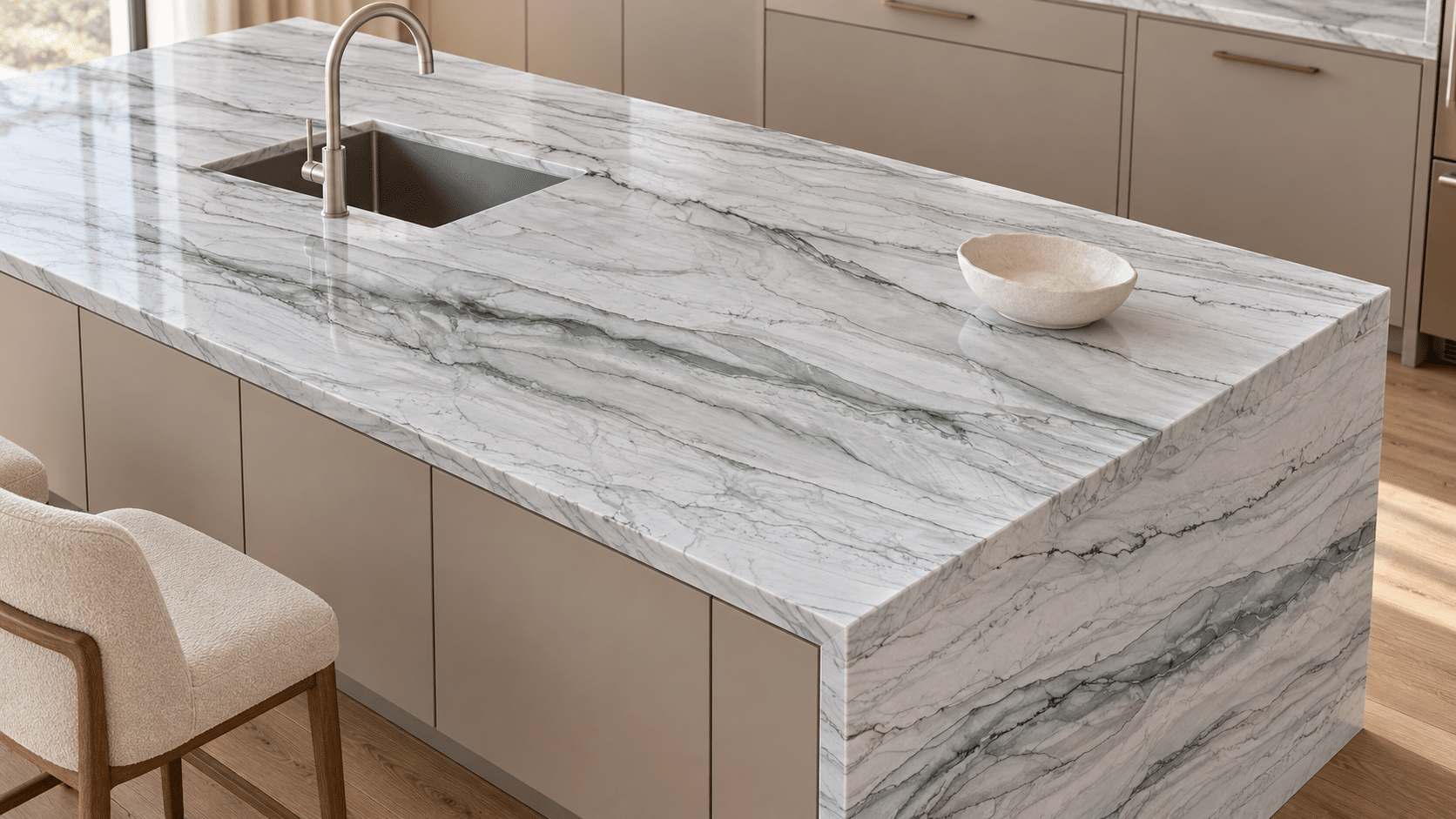
Carrara usually reads softer, while Calacatta and Statuario often create stronger contrast. Those are useful starting points, not rules that every slab follows.
Stand back far enough to see the whole surface. A fine vein that looks quiet in a sample may repeat densely across an island. A bold vein may leave a generous area of white that keeps another slab feeling open.
Then compare the stone beside your cabinet finish. A blue-gray background and a warmer white can produce very different results against the same oak or painted door.
The name does not give you a durability ranking. Paying more for a rarer or more sought-after selection does not remove marble’s sensitivity to acids or everyday scratching.
Let the name guide your search, then judge the actual slab. Its vein placement should suit the pieces you need to cut, including any backsplash or return. That is where a material you like becomes a surface that belongs in your room.
Finish and Care Matter as Much as the Marble Name
Honed and polished marble handle light differently. That changes how the countertop looks and how easily you notice wear.
A polished finish reflects the room. When an acidic spill etches the surface, the dull area interrupts that reflection. Honed marble has a matte finish, so some changes in sheen are less obvious. It can still etch.
Sealing addresses a different concern. A penetrating sealer slows liquid absorption and gives you more time to clean a spill before it stains. It does not stop acid from reacting with the marble.
Think about the work that happens on the surface. Citrus preparation and wine service need boards or trays. Oils and colored liquids need prompt cleanup. A powder-room vanity sees different exposure, including cosmetics and cleaning products.
Our guide to marble stains and etching explains the distinction and how finish choice affects what you see.
If you cook frequently, read what marble asks of you in a working kitchen. If you want less visible wear from natural stone, compare quartzite and marble before narrowing the selection.
Match the Slab to the Vanity, Island, and Cut Layout
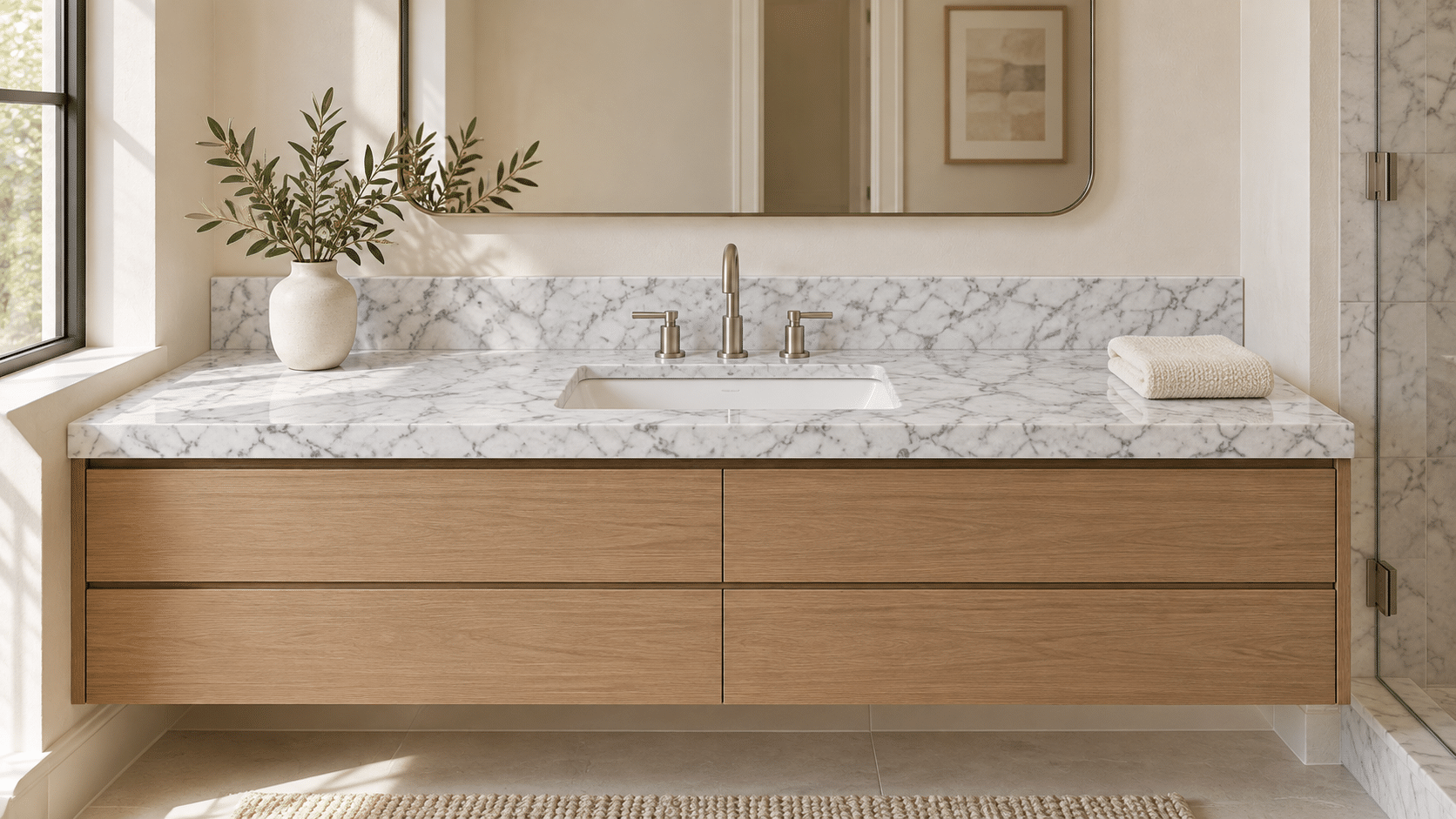
Review where the veins will land before approving the cuts. A slab may look right as a whole yet need careful placement to work across your countertop pieces.
For an island, the broadest area of stone sets the composition. A sink cutout can remove part of a prominent vein. On a vanity, the basin and faucet openings leave less uninterrupted space for the pattern.
Bring enough context to make those decisions:
- Bring the layout. Dimensions and sink locations show which portions of the slab will remain visible.
- Compare your finishes. Cabinet samples, flooring, and room photos help you judge tone and contrast together.
- Review the full slab. Look beyond the sample to see the spacing and direction of movement.
- Check the proposed cuts. Review seams and transitions, including any backsplash or waterfall return.
Our digital layout review lets you see vein flow and slab orientation before fabrication. It gives you a chance to question a transition while there is still room to change the layout.
This matters especially with expressive stones such as Arabescato or Calacatta Viola. The layout should carry the movement through the finished pieces in a way you have reviewed, rather than leaving that discovery for installation day.
Review the Marble Before You Approve the Cuts
Choose the marble for the room you want and the care you are comfortable giving it. Then review the actual slab against the layout.
For a Chicagoland project, bring your drawings and cabinet samples to our Elk Grove Village showroom. We can compare the stone with your intended use and review the details that affect fabrication.
Request a private consultation to see how your marble selection will work across the finished space.
Frequently Asked Questions
Which Type of Marble Is Best for Kitchen Countertops?
The right choice depends on the appearance you want and your comfort with visible wear. Carrara often offers quieter movement; Calacatta and Statuario usually bring stronger contrast. Those differences do not create a universal performance winner. Every natural marble selection needs realistic expectations around acids and scratching. Compare the exact slab and finish, then discuss how you cook and clean. If keeping the surface visually unchanged matters more than marble’s character, review another material before committing to the name or appearance alone.
What Is the Difference Between Carrara and Calacatta Marble?
Carrara commonly has a softer white or blue-gray background with finer gray veining. Calacatta often has a brighter white base and broader gray or gold veins. Individual slabs can vary enough that the names alone will not settle the choice. Compare the full pieces beside your cabinetry, including the areas that will become the island or backsplash. Cost depends on the exact selection and project. Ask for a quote based on your slab and layout rather than budgeting from a fixed price multiplier.
Is Honed or Polished Marble Better for a Busy Kitchen?
Honed marble can suit a busy kitchen when you prefer a matte surface and less contrast between the finish and some etch marks. Polished marble creates more reflection, which can make a dull mark easier to notice. Neither finish stops the acid reaction. Choose based on the look you want to maintain and how you feel about patina. View both finishes in person if possible, then discuss cleaning and care for the selected slab. Honing changes the appearance; it does not make marble maintenance-free.
Does Every Type of Marble Need the Same Sealing Schedule?
No. The stone’s absorption, surface finish, sealer product, and daily use all affect care needs. Follow the guidance for your installation instead of applying a general annual rule. Areas exposed to oils or repeated spills may need closer attention than a lightly used vanity. If absorption appears to change, ask for an assessment before adding another product. More sealer will not prevent etching, and applying it to address a dull mark can leave the original issue unresolved. Identify what changed before choosing a treatment.