Marble countertop care starts with one distinction: stains and etching are not the same damage.
A stain changes color because something entered the stone. An etch changes the finish because acid reacted with the marble. If you treat one like the other, you can waste time or make the surface less uniform. The right routine is simpler: slow absorption, keep acids off the surface, and match any repair to the mark. Here is how to protect the finish before daily use changes it.
Marble Stains and Etching Are Different Problems
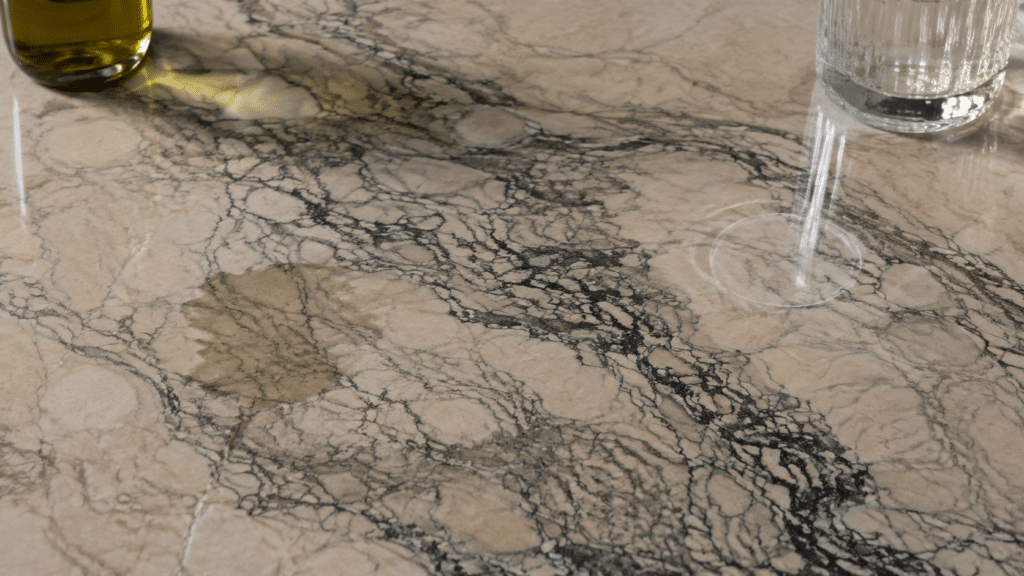
A stain forms when oil, pigment, or another substance absorbs into the stone and changes its color. It often looks darker than the surrounding marble, though some organic stains can create brown or yellow tones.
An etch is a surface reaction. Acid contacts the marble’s calcium carbonate and changes the finish, leaving a dull spot, pale ring, or rough patch. On polished marble, the damaged area often becomes visible because it no longer reflects light like the surrounding surface.
One spill can cause both. Wine, for example, may leave pigment below the surface and a dull mark above it. Inspect the area only after it is clean and dry. A color change suggests staining. A change in sheen or texture suggests etching.
Lighting can change what you see. Look straight down for color, then move a light source or view the surface at a low angle. An etch often becomes clearer as the reflection moves across it. A stain usually remains visible regardless of the viewing angle.
Do not use the first visible clue as a treatment plan. A dark area may be absorbed oil, trapped moisture, or residue. A pale ring may be an etch, dried cleaner, or both. Safe cleaning and patient inspection come before repair.
How to Prevent Stains From Absorbing Into Marble
Stain prevention is a race against absorption. The faster you remove a spill, the less time it has to move into the stone.
- Blot spills with a clean, absorbent cloth. Wiping can spread oil or pigment across a larger area.
- Clean the surface with a pH-neutral product made for natural stone, then dry it.
- Use coasters under drinks and trays under oils, cosmetics, soaps, and other products that may leak.
- Prepare food on a cutting board instead of directly on the marble.
- Keep cooking oils, coffee, wine, and strongly colored liquids from sitting on the surface.
- Maintain the penetrating sealer recommended for the specific marble and finish.
Do not rely on a fixed resealing calendar. Stone, sealer, finish, and daily use all affect performance. Follow the product guidance and your fabricator’s recommendations, and address changing absorption before a visible stain becomes the warning.
Pay attention to where exposure repeats. The counter beside a coffee maker, cooking oil, soap dispenser, or vanity tray often sees more spills than the rest of the slab. Small trays and coasters protect those areas without covering the marble or changing the design.
How to Reduce Etching From Daily Use
You prevent etching by controlling acid contact, not by applying more sealer. Common kitchen acids include lemon, vinegar, wine, tomato, and some carbonated drinks. In bathrooms, certain cleaners, cosmetics, and personal-care products may also contain acids.
Build the protection into the way you use the surface:
- Cut citrus and prepare acidic foods on a board with a juice channel.
- Place coasters under drinks and trays under bottles that may drip.
- Blot acidic spills immediately, then clean with a pH-neutral marble cleaner.
- Avoid vinegar, lemon-based cleaners, bathroom descalers, and unapproved all-purpose products.
- Do not use abrasive pads or powders to chase a dull mark.
Fast cleanup can reduce the severity of an etch, but it cannot reverse a chemical reaction that has already changed the finish. The stronger habit is preventing direct contact in the first place.
What Sealing Does and Does Not Protect
A penetrating sealer slows absorption. It gives you more time to remove oils, pigments, and moisture before they enter the marble. It does not create an acid-proof coating over the surface.
Sealed marble can still etch because acid reacts with the calcium carbonate at the face of the stone. This is the point many care guides blur: sealing supports stain resistance, while daily habits do the work of reducing etching.
Use the sealer chosen for your marble and finish. Do not stack products or reseal simply because a general calendar says it is time. If you are unsure how the existing sealer is performing, start with the care guidance for your installation or ask the fabricator before adding another product.
How Finish Choice Changes What You See

Polished marble reflects light. When acid disturbs that smooth surface, the etch interrupts the reflection and becomes easier to see. A small dull ring can stand out even when the stone has not absorbed a stain.
Honed marble has a softer, matte appearance. Etching still occurs, but the change in sheen may blend more easily with the surrounding finish. Honing does not make marble acid-proof.
This is a design decision as much as a care decision. If you want marble in a busy kitchen and prefer a surface that can develop a more relaxed patina, a honed finish may fit better. If crisp reflection matters, polished marble asks for more controlled daily habits.
What to Do When a Mark Already Exists
Do not treat a visible mark until you know whether it is a stain, an etch, or both.
- Clean the area with a pH-neutral marble cleaner.
- Dry it fully and inspect it from different angles.
- Look for color change, sheen change, texture change, or a combination.
- Note what caused the mark and how long it remained on the surface.
- Contact the fabricator or a stone restoration professional before using a poultice, polishing powder, or abrasive method.
A poultice may help draw out certain absorbed stains, but it will not restore a finish changed by acid. An etch may need professional honing or polishing to match the surrounding surface. Localized DIY work can turn one small mark into a larger patch with uneven sheen.
Give moisture time to dry before assuming a dark mark is permanent. If the area becomes lighter as it dries, wait and keep it clear. If the color remains, the texture feels different, or the mark crosses a seam or edge, document it and request a professional assessment.
Protect the Finish You Chose
Marble rewards a clear ownership decision. Choose the finish with your daily habits in mind, seal for stain resistance, and accept that acid control does more than any bottle can.
Our guide to marble in working kitchens can help you decide whether the material fits. For a Chicagoland project, request a private consultation at our Elk Grove Village showroom. We will help you compare the slab, finish, and placement before fabrication so the care expectations match the look you selected from day one.
Frequently Asked Questions About Marble Stains and Etching
Does sealing prevent marble etching?
No. A penetrating sealer slows the absorption that causes stains. It does not stop acid from reacting with the marble’s calcium carbonate. Coasters, cutting boards, pH-neutral cleaners, and prompt spill removal do more to reduce etching during daily use.
How can you tell an etch from a stain?
A stain changes the stone’s color because a substance entered the marble. An etch changes the surface sheen or texture because acid reacted with it. Clean and dry the area first, then inspect it under angled light. A mark can include both types of damage.
Can an etch mark be removed?
Many etch marks can be improved through honing or polishing, but the repair needs to match the surrounding finish. The right method depends on the marble, finish, depth, and size of the affected area. Avoid unapproved powders or abrasives that may create a larger uneven patch.
Does honed marble etch?
Yes. Honed marble contains the same acid-sensitive calcium carbonate as polished marble. Its matte finish may make some etches less obvious because there is less reflection to interrupt, but the chemical reaction still occurs. Honing changes visibility, not acid resistance.
Is vinegar safe for marble?
No. Vinegar is acidic and can etch marble. Do not use it as a household cleaner on the countertop, even when diluted. Choose a pH-neutral cleaner labeled for natural stone and follow the care instructions for the installed marble and finish.
How often should marble be resealed?
There is no reliable schedule that fits every installation. The marble type, finish, sealer, use, and cleaning habits all affect performance. Follow the sealer manufacturer and fabricator’s guidance. If absorption appears to be changing, ask for an assessment before applying another product.