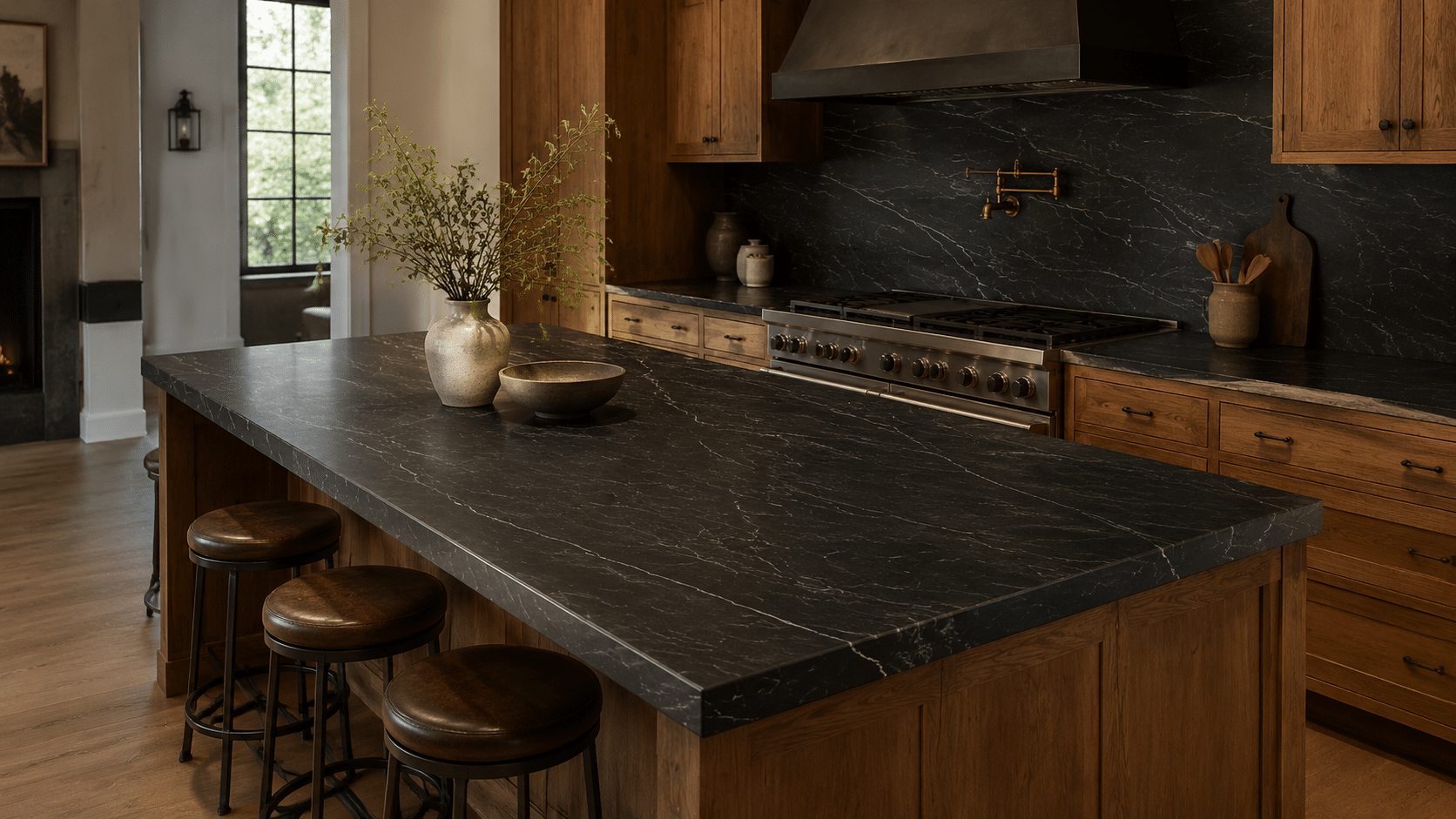
Soapstone countertop care is simpler than most natural-stone maintenance. You do not seal it, and you do not need to oil it for protection.
Clean it with mild soap and water, then decide how much of its natural darkening and patina you want to manage. That is the real choice. Oil or wax can deepen the color and even out the surface, while doing nothing lets the stone age on its own. Here is how to clean, oil, and handle scratches without over-treating the material.
What Soapstone Needs and What It Does Not
Soapstone does not follow the granite or marble care model. Its dense, non-porous structure means it does not need a penetrating sealer to resist household spills.
Routine care has three parts:
- Clean away food, grease, and residue.
- Decide whether to leave the stone untreated or darken it with an approved oil or wax.
- Address scratches according to their depth and the finish you want to preserve.
That second step is optional. Mineral oil and soapstone wax change the appearance. They do not make the stone stronger or create the stain protection a sealer provides on more porous materials.
If you prefer a gradual, uneven patina, let daily use shape the surface. If you want a darker and more uniform look sooner, choose a compatible treatment and apply it with restraint.
How to Clean Soapstone Countertops
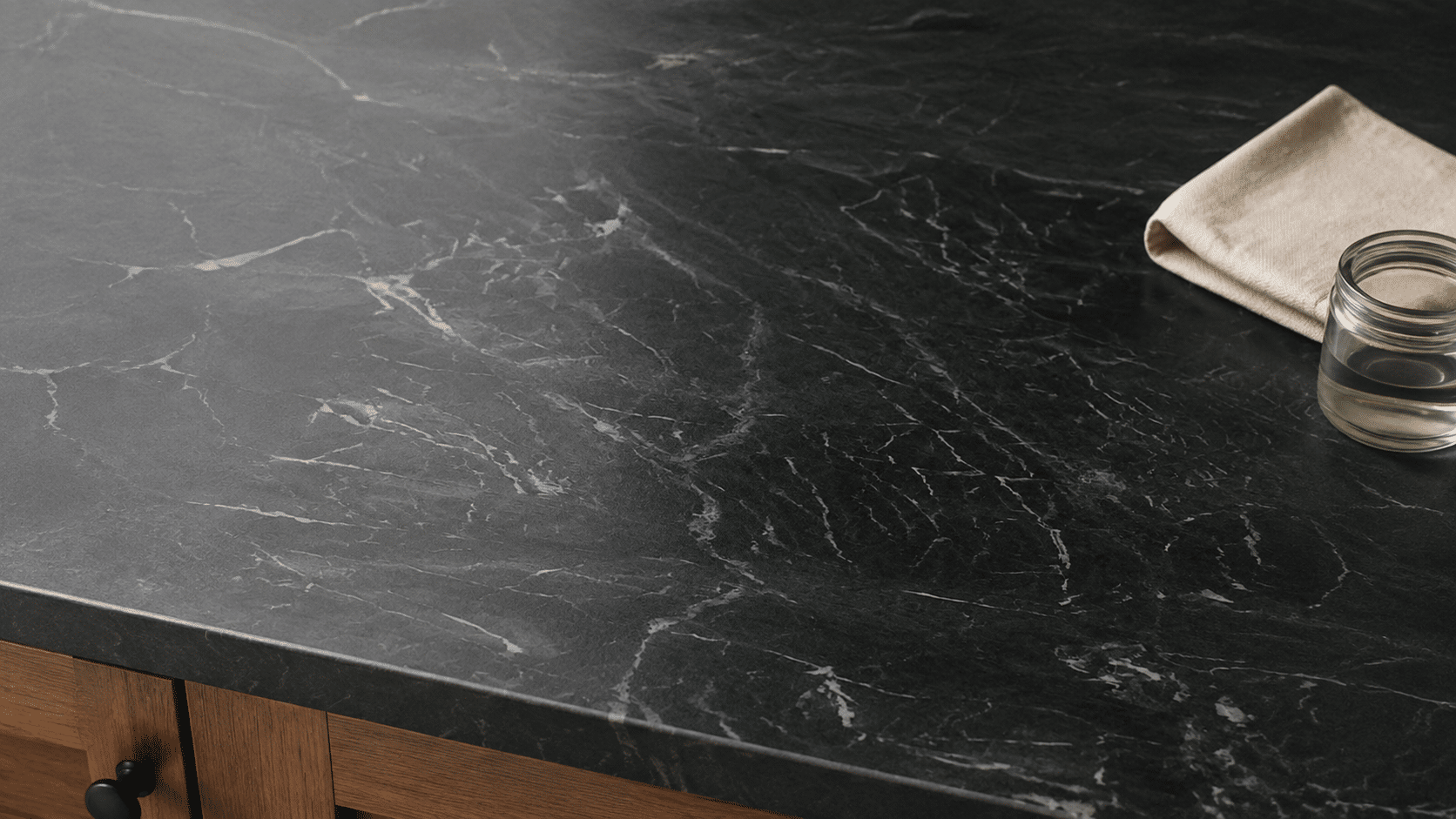
Daily cleaning should remove residue without leaving a film or changing the finish.
- Wipe away crumbs and loose debris with a soft cloth.
- Clean the surface with warm water and a small amount of mild dish soap.
- Rinse or wipe again with clean water.
- Dry the countertop with a soft towel to prevent streaks and soap residue.
For grease or stubborn buildup, repeat the mild cleaning process before reaching for a stronger product. Avoid harsh solvents, acidic cleaners, and rough scouring pads unless the fabricator has approved them for the installed finish.
If the countertop has been oiled or waxed, some cleaners may strip or disturb the treatment. Follow the product instructions and keep the care routine consistent across the full surface rather than spot-treating one visible area.
Mineral Oil and Wax Change the Look, Not the Protection
Soapstone naturally darkens as it oxidizes and develops patina. Food-grade mineral oil or an approved soapstone wax speeds up that visual change. It deepens the color and helps high-use areas read more evenly.
The treatment is cosmetic. It does not seal the stone.
If you choose to oil or wax the countertop:
- Confirm that the product is compatible with the installed finish.
- Apply a thin, even coat across the full surface.
- Allow it to sit only as directed by the product or fabricator.
- Wipe away all excess until the countertop feels dry, not oily.
- Reapply when you want to refresh the color, not because a calendar says you must.
Too much product can leave the surface hazy, sticky, or uneven. More oil does not create more protection. The goal is a controlled appearance, not a coating that sits on top of the stone.
How to Manage Scratches and Everyday Patina
Soapstone is softer than granite and quartzite, so it can show light scratches and marks during normal use. That does not mean the surface is failing. Many owners choose soapstone because those changes build a lived-in patina rather than hiding every sign of use.
First, determine what you are seeing:
- A pale area may be displaced oil or wax rather than a scratch.
- A fine line that catches a fingernail may be a shallow surface scratch.
- A deep line, gouge, chip, or crack needs a different response.
Clean and dry the area before deciding. If the mark only changed the treatment, refreshing the existing oil or wax may blend it.
Do not sand an isolated spot without guidance. The wrong grit, pressure, or working area can change the finish and create a larger patch. Ask the fabricator how the surface was finished and whether the mark should be blended, refinished, or left to soften into the patina.
Common Soapstone Care Mistakes
Soapstone usually suffers more from over-treatment than neglect. Avoid these common mistakes:
- Applying a penetrating sealer that the stone does not need.
- Using heavy coats of mineral oil that leave sticky residue.
- Scrubbing with rough pads that change the finish.
- Switching between oil, wax, and cleaners without checking compatibility.
- Sanding one small area without matching the surrounding sheen.
- Treating every color change as damage instead of normal oxidation or patina.
If the surface looks uneven, start by identifying what was applied and where the appearance changed. Adding another product before you know the cause can make the inconsistency harder to correct.
When Soapstone Needs Professional Attention
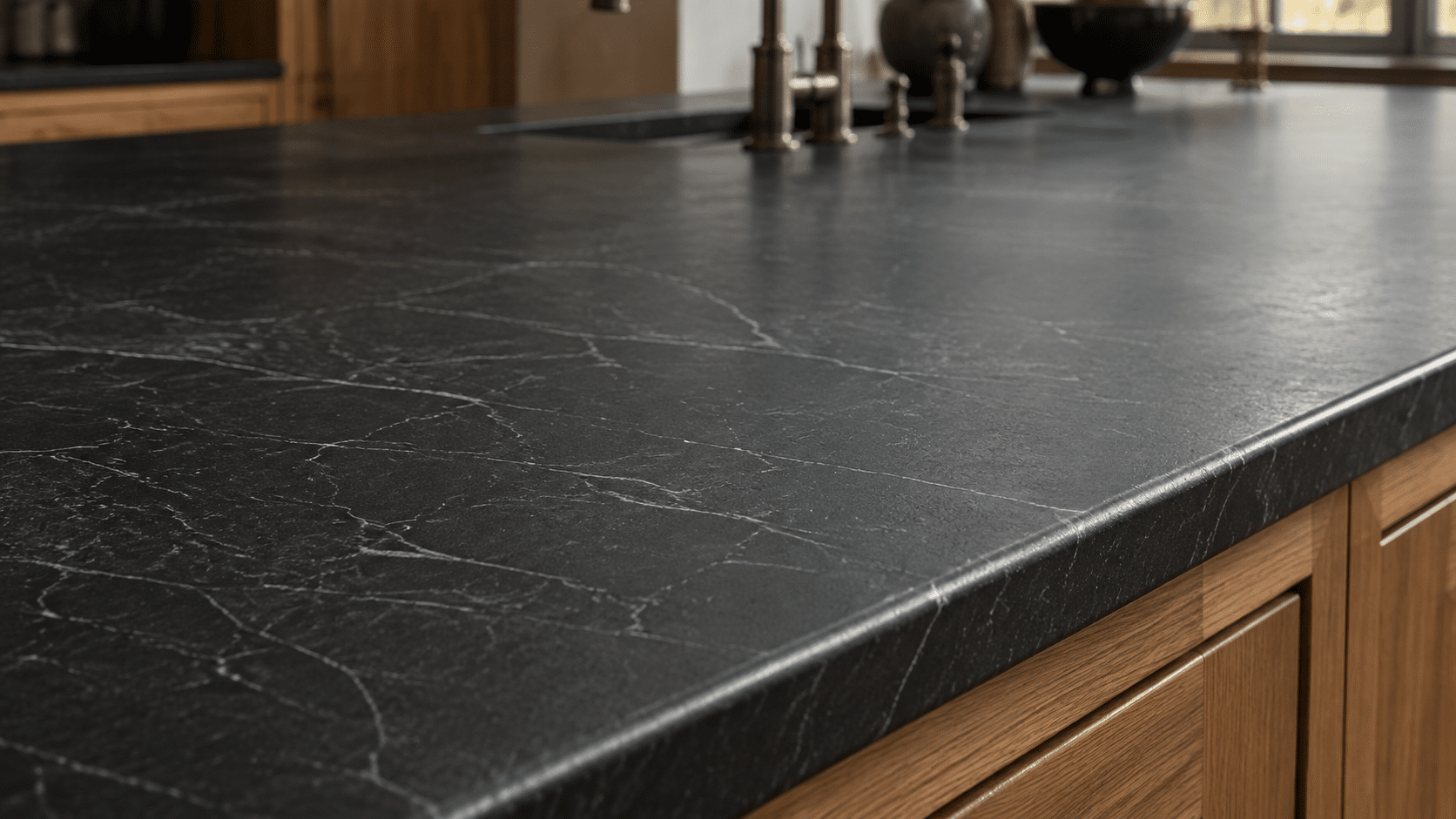
Light marks and uneven oiling are usually cosmetic. Deep gouges, chipped edges, cracks, damaged seams, and large areas with an altered finish deserve professional review.
Contact the original fabricator when possible. They can confirm the finish, previous treatment, and repair method used on the installation. That information matters because a repair should match the surrounding surface, not simply make the damage less visible from one angle.
Stop using the affected area if a crack appears near a sink, cooktop cutout, seam, or unsupported edge. Those locations may involve more than surface appearance. Ask a professional to assess the damage before it progresses.
Choose How You Want the Surface to Age
Soapstone asks you to choose an aging style, not a maintenance schedule. Leave it untreated for gradual, uneven patina, or use an approved oil or wax for a darker, more uniform look.
Review our stone care guidance before changing an existing treatment. If you are considering Black Soapstone Countertops for a Chicagoland project, reserve a showroom visit. Seeing the slab in person makes it easier to decide how you want the surface to begin and change.
Frequently Asked Questions About Soapstone Care
Does soapstone need to be sealed?
No. Soapstone is dense and naturally non-porous, so it does not need a penetrating sealer for household stain resistance. Products sold for granite or marble may leave an unwanted film or change the finish. Follow the fabricator’s care guidance instead of applying a general stone sealer.
How often should soapstone be oiled?
There is no required schedule because oiling is cosmetic, not protective. Reapply food-grade mineral oil or an approved soapstone product when you want to restore a darker, more even appearance. Always wipe away the excess so the surface does not feel oily or sticky.
Can soapstone stain?
Soapstone resists absorption better than many natural stones, so common household spills are less likely to create deep stains. Oils, residue, or incompatible products can still leave visible films or uneven darkening. Clean the area before assuming the mark has entered the stone.
Can scratches be removed?
Many light scratches can be blended, but the method should match the original finish. Clean the area first and check whether the mark only displaced oil or wax. Ask the fabricator before sanding so one small repair does not create a larger patch with a different sheen.
Is mineral oil food safe?
Use only food-grade mineral oil or a product specifically approved for soapstone countertops. Do not substitute general household, machine, or fragranced oils. Follow the product instructions and wipe away all excess before using the surface for food preparation.
Can hot pans be placed on soapstone?
Soapstone has strong heat resistance, but a trivet is still the controlled choice. It protects the surrounding finish, keeps residue from baking onto the surface, and reduces sudden temperature changes around seams, cutouts, and edges. Follow the fabricator’s care guidance for the installed countertop.
What happens if soapstone is never oiled?
Nothing harmful. The stone will darken and develop patina through oxidation and daily use instead of changing all at once. High-use areas may darken sooner, which some owners prefer. If you later want a more uniform appearance, you can discuss a compatible oil or wax treatment.