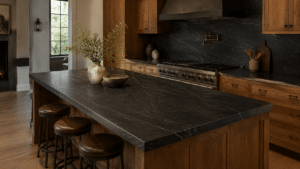
Can you put hot pans on granite countertops? The stone may tolerate brief contact, but direct heat should not become a habit.
The issue is not whether granite can survive one pan. It is whether heat can dull the sealer, stress a vulnerable area, or leave you fixing damage a trivet would have prevented. Use the surface with confidence, but place hot cookware and heat-producing appliances on a barrier. Here is what direct heat affects, what to do after exposure, and when to call a stone professional.
Why Granite Handles Heat Better Than Many Countertop Materials
Granite is an igneous stone made mainly from minerals such as quartz and feldspar. Those minerals give the stone stronger heat tolerance than many countertop materials that contain resin or other heat-sensitive binders.
That does not make an installed granite countertop heat-proof. The slab has been cut, polished, sealed, and fitted around sinks, cooktops, seams, and edges. Each detail changes how the finished surface responds to concentrated heat.
Think of heat resistance as tolerance, not permission. A warm plate or briefly misplaced pan is unlikely to create a problem. Cookware moved directly from a burner, broiler, or oven brings more heat to one small area and creates a risk that is easy to avoid.
What Direct Heat Can Affect
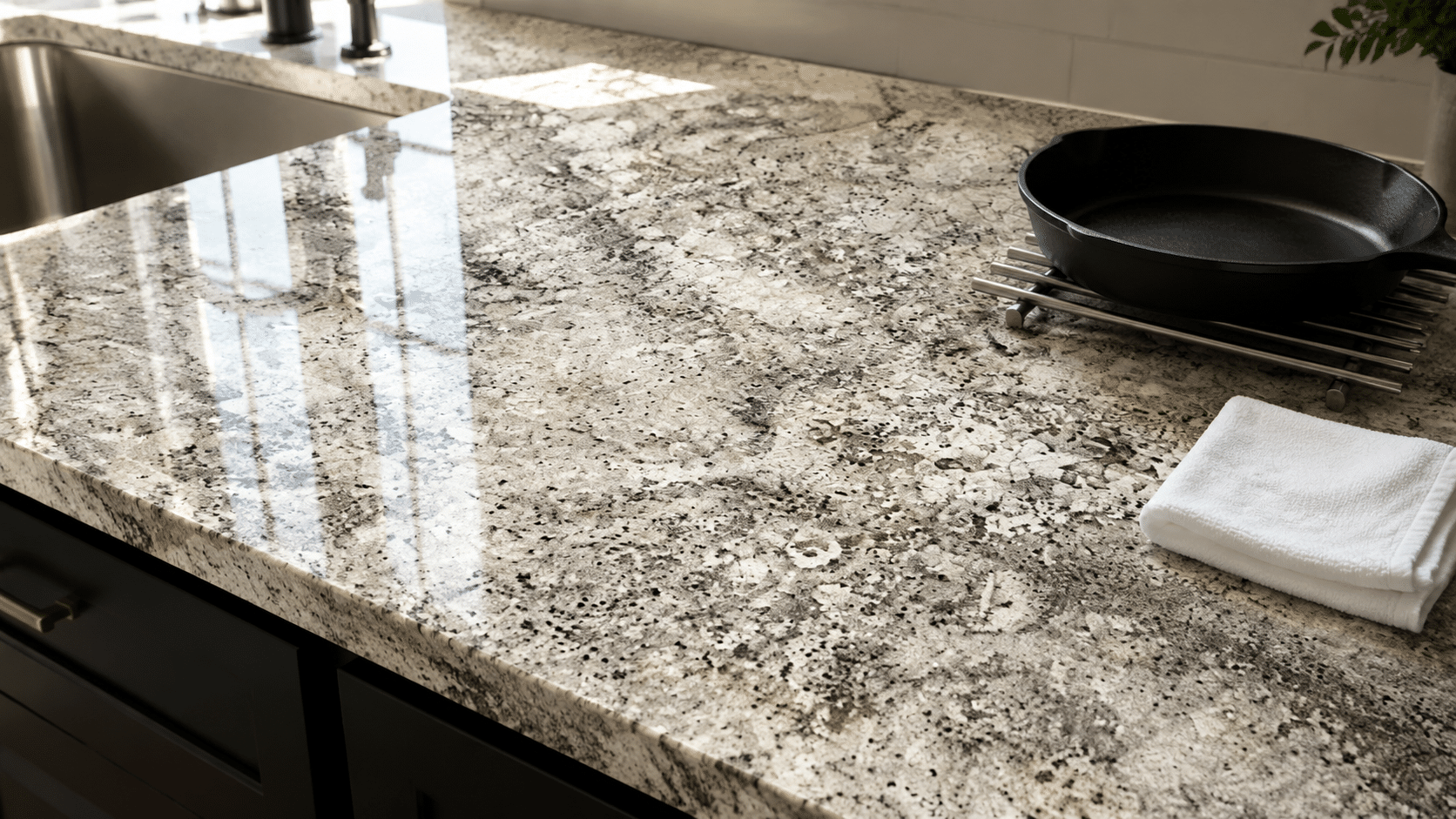
The granite itself is only one part of the installed surface. Direct heat can affect the sealer, residue on the countertop, and areas where the stone already carries more stress.
The sealer may respond before the stone
A penetrating sealer helps slow the absorption of oils and liquids. Depending on the product and its condition, repeated high heat may weaken that protection or leave haze and discoloration. The granite may remain intact while the finish no longer looks or performs as intended.
Sudden temperature changes create stress
Granite expands as it warms and contracts as it cools. Fast, uneven temperature changes can place stress on the slab. Cracking from one hot pan is uncommon, but the risk deserves more attention near natural fissures, cutouts, edges, seams, or existing damage.
That risk is not distributed evenly across the countertop. The open field of a slab has more stone around it than a narrow rail in front of a sink or cooktop. Edges, corners, and cutouts also change the geometry of the surface. This is why a blanket claim that granite either “can” or “cannot” take a hot pan misses the installed conditions that matter.
Residue can become the visible problem
Oil, sugar, moisture, or cleaner left under hot cookware can bake onto the surface. What looks like heat damage may be residue, a sealer reaction, or a combination of both. That distinction matters because each problem needs a different response.
The same applies to hot appliance bases. A slow cooker releases moderate heat for hours. An electric skillet or air fryer may run hotter in shorter cycles. The surface needs protection from both peak temperature and sustained exposure.
Practical Heat Rules for Granite Countertops
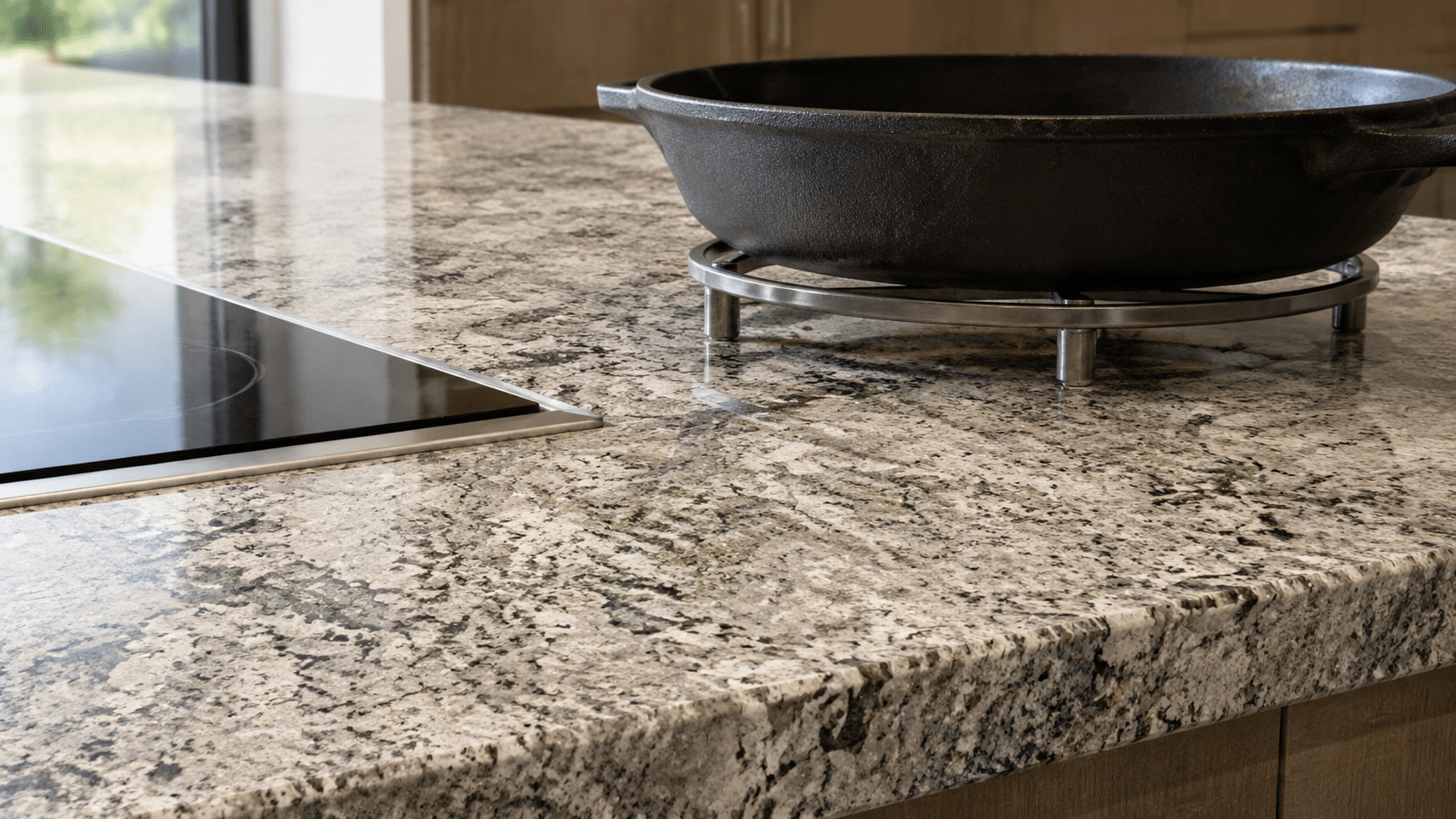
You do not need to treat granite like a fragile surface. You need a few automatic habits that keep concentrated heat off the countertop.
- Place a trivet under pans, Dutch ovens, cast iron, baking sheets, and roasting trays coming from direct heat.
- Use a heat-safe mat under air fryers, electric skillets, toaster ovens, and other appliances that release sustained heat.
- Follow the appliance manufacturer’s clearance and ventilation instructions. A mat should protect the stone without blocking airflow.
- Keep a trivet beside the cooktop so protection is available before you need it.
- Do not place very hot cookware on a cold or wet section of the countertop.
- Follow the care guidance for the specific sealer used on your installation.
The rule is simple: if the cookware or appliance is too hot to hold safely, give the countertop a barrier. The Natural Stone Institute also recommends trivets or mats under hot dishes and heat-producing appliances.
Choose the barrier for the job. A raised metal trivet helps air move beneath hot cookware. A flat heat mat may work better under an appliance, provided it does not block vents or conflict with the manufacturer’s instructions. Keep both close to the work zone so protection becomes part of cooking, not an extra decision.
What to Do If a Hot Pan Was Already Placed on Granite
One brief mistake does not automatically mean the countertop is damaged. Respond calmly and inspect the surface once it has returned to room temperature.
- Remove the cookware and let the granite cool on its own.
- Do not pour cold water on the heated area or press ice against it.
- Once cool, clean the area with a pH-neutral stone cleaner and a soft cloth.
- Dry the surface, then inspect it from several angles and under direct light.
- Look for new haze, discoloration, a tacky patch, a hairline crack, or a change near a seam or cutout.
Do not apply more sealer until you know what changed. If the mark remains after safe cleaning, or if you see a crack, contact the original fabricator or a stone professional for an assessment.
Take a clear photo in direct and angled light before trying another product. Note the cookware involved, how long it sat, and whether the area was wet or cold. Those details help a professional separate surface residue from a sealer reaction or a change in the stone.
Protect Granite Without Treating It Like a Fragile Surface
Granite should make a working kitchen easier to use, not harder to live with. The right habit is simple: cook freely, then set heat on a trivet.
For broader ownership guidance, review our granite durability guide and stone care recommendations. If you are selecting granite for a Chicagoland kitchen, reserve a showroom visit with Precision Stone Design. We can review the slab, cooktop layout, cutouts, and appliance placement before fabrication.
Frequently Asked Questions About Heat and Granite
Can granite crack from a hot pan?
It is possible, but uncommon. The risk increases when a very hot pan creates a sudden, concentrated temperature change near a fissure, cutout, edge, seam, or previously damaged area. A trivet removes that avoidable risk without changing how you use the kitchen.
Can an air fryer sit directly on granite?
The appliance can sit on granite, but use a heat-safe mat if the manufacturer allows it. Air fryers can release sustained heat through their base and vents. Maintain the required clearance, keep vents open, and do not use a mat that traps heat against the appliance.
Does heat damage granite sealer?
High or repeated direct heat may affect some sealers before it damages the granite. The result may appear as haze, discoloration, or reduced resistance to oils and liquids. The exact response depends on the sealer chemistry, its age, and the intensity and duration of exposure.
Is one accidental exposure likely to ruin the countertop?
Usually not. Remove the pan, let the area cool naturally, clean it with a stone-safe product, and inspect it under good light. If the appearance or texture changed, do not guess at a treatment. Ask a stone professional to identify whether the issue involves residue, sealer, or stone.
Is granite more heat resistant than quartz?
Granite generally tolerates brief heat exposure better than engineered quartz because quartz surfaces contain resin binders that can discolor or scorch. Neither surface should receive hot cookware directly. Use a trivet on both and follow the manufacturer or fabricator’s care guidance for the installed material.