Soapstone does not need to be sealed. Its low absorption means a penetrating sealer is unnecessary for normal countertop use. Mineral oil and soapstone wax serve a different purpose: they deepen the color, and using either is optional.
You can leave soapstone untreated if you prefer its softer gray appearance and gradual patina. Before choosing a product, decide how you want the surface to look. That distinction explains the care it needs and why a bottle labeled sealer can be confusing.
Does Soapstone Need to Be Sealed? Here Is Why It Does Not
Countertop soapstone does not absorb household spills the way more porous stones can. A penetrating sealer enters a stone’s pores to slow the way liquids soak in. Soapstone does not need that step.
That kind of product can leave a film or change the look without adding useful protection.
This does not mean soapstone needs no care. Food and grease still need cleaning, and the surface can show scratches because the material is relatively soft. Sealing soapstone does not address either issue.
It helps to separate what you see from what the stone needs. A dark patch near the cooktop may reflect cooking oils on the surface. A pale area may show where an existing oil or wax treatment has worn away. Neither change, by itself, shows a need for sealer.
Start with mild cleaning and the care guidance for your installed material. If a mark remains, identify its cause before treating it. Adding another product can make a simple appearance change harder to assess.
Oil and Wax Change Soapstone’s Appearance

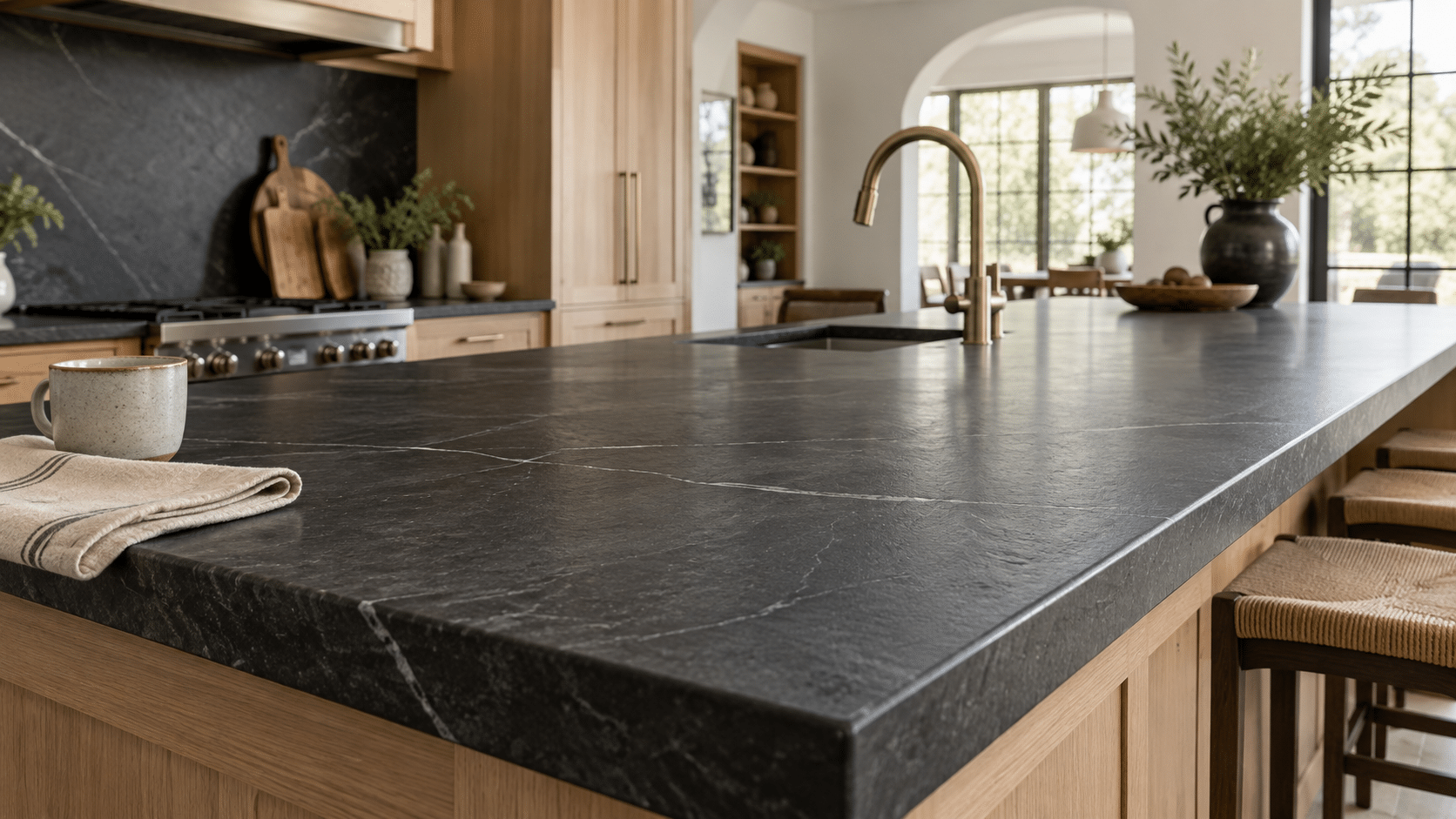
Leaving soapstone untreated gives the surface time to develop its own patina through use. Busy areas may darken sooner, while less-used sections remain lighter. That variation suits a room where you welcome signs of daily life.
Food-grade mineral oil can deepen the color more quickly. A compatible soapstone wax offers another way to manage the look. The result depends on the stone and the product, so check both before treating the whole surface.
Neither option makes soapstone harder or adds heat resistance.
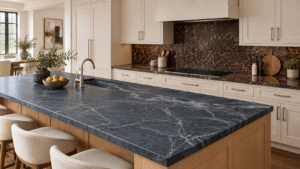
Consider the look beside your other finishes. A lighter gray surface may sit quietly against pale oak. A darkened charcoal finish can create more contrast with the same cabinet. Seeing that difference in your room’s light is more useful than assuming every soapstone kitchen should begin with a dark surface.
There is no required oiling calendar. If you choose a treatment, follow its application instructions and remove excess as directed. Renew it when you want to refresh the appearance.
Our soapstone care guide explains cleaning and optional oiling in more detail. Choose the appearance first, then use the least treatment needed to maintain it.
What is Soapstone Sealer?

The term soapstone sealer does not always mean the same thing as penetrating sealer for porous stone. Some products sold with sealing language are oil or wax blends used to darken the surface.
The label alone does not tell you whether you need it.
Before applying anything, check:
- Function: Is the product meant to change color, form a coating, or reduce absorption?
- Compatibility: Is it suitable for your soapstone and its existing finish?
- Use: Does the manufacturer approve it for use on your kitchen counter?
- Instructions: What preparation and removal of excess does it require?
For a previously treated countertop, keep the container or record the product name. If the finish becomes sticky or uneven, photograph the surface after gentle cleaning and share that history with your fabricator.
Avoid layering a new product over an unknown treatment or trying a stripping solvent without guidance.
Soapstone tolerates heat well, yet its softer surface will show wear. Our comparison of soapstone and granite explains those tradeoffs. If you prefer a surface that stays visually unchanged, discuss that before choosing the stone.
Selecting Between Natural and Oiled Soapstone
The useful decision is whether you prefer soapstone’s untreated appearance or want to deepen its color with an approved oil or wax. A penetrating sealer is not a required step between selection and everyday use.
For a new Chicagoland project, visit Precision Stone Design in Elk Grove Village to review the material beside your cabinet finishes. Our honed black soapstone selection offers a starting point for that conversation.
If you already have soapstone, share photos and the name of any treatment you have used. That gives our team a clearer basis for discussing the next step without guessing from a color change alone.
Begin a conversation with our team about the soapstone finish and care that suit your space.
Frequently Asked Questions
What Happens if You Never Oil Soapstone?
Soapstone remains usable without oil. Its look changes through daily use, with some areas darkening sooner than others. That uneven patina is a visual choice, not evidence that you have missed a required protective treatment.
Continue normal cleaning and use a cutting board to limit surface marks. If you later prefer a darker, more even appearance, ask about a compatible oil or wax. You do not need to commit to that treatment at installation, and there is no required number of coats for every soapstone surface.
Is Soapstone Wax the Same as Penetrating Sealer?
No. A penetrating sealer reduces absorption in a porous material. Soapstone wax is often used to change or maintain the surface’s look, though each product has its own blend.
Read the manufacturer’s description rather than relying on words such as seal or protect on the front label. Confirm that the product suits the stone, intended use, and any previous treatment. If you are unsure what is already on the countertop, ask before adding something else. Mixing products can leave a finish that looks or feels uneven.
Does Mineral Oil Protect Soapstone From Scratches?
Mineral oil does not harden soapstone or make it scratch-resistant. It darkens the appearance, which can make some light marks less noticeable, but it does not replace missing stone or repair a gouge.
Use a cutting board for food preparation and lift heavy cookware rather than dragging it. If a mark bothers you, clean the area first and ask whether the stone or its treatment has changed. Avoid sanding an isolated spot without guidance; a repair with a different sheen can stand out more than the original mark.
What Should You Do if Soapstone Already Has Sealer on It?
Identify the product before trying to remove it. Something sold as soapstone sealer may be an oil or wax blend, while another product may leave a coating that needs a different approach.
Keep the packaging if available, note when it was applied, and photograph any changes in the finish. Share those details with the original fabricator or a stone-care professional. Do not apply another treatment to correct the appearance until you know what is present. The right response depends on the product and the finish beneath it.