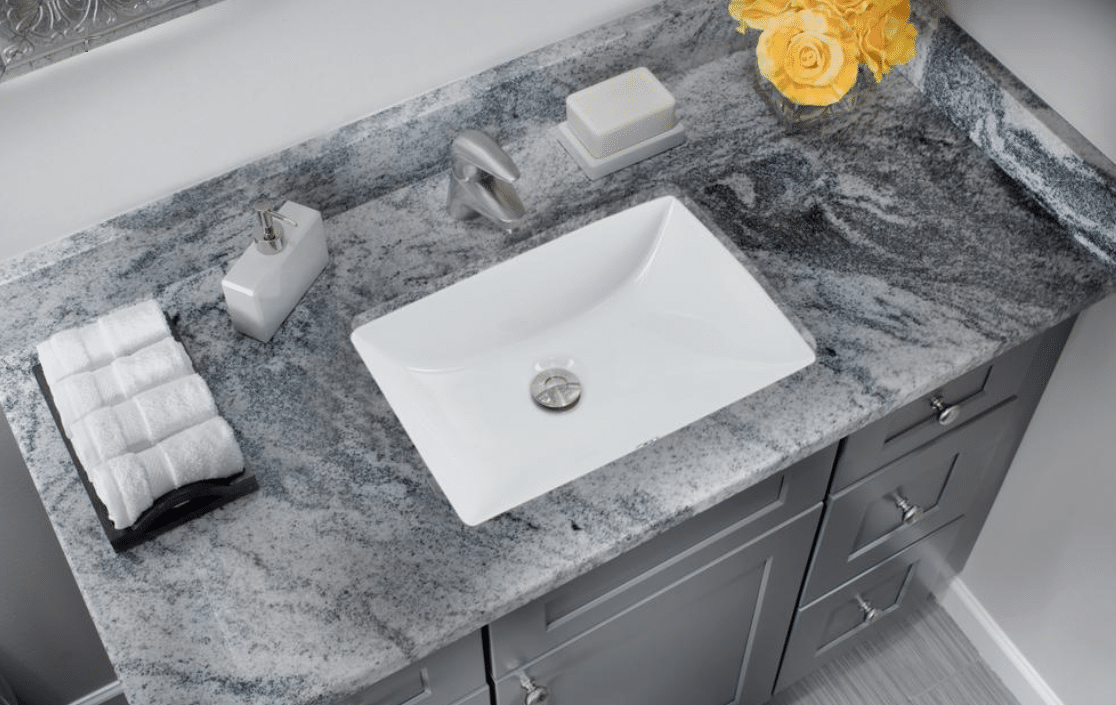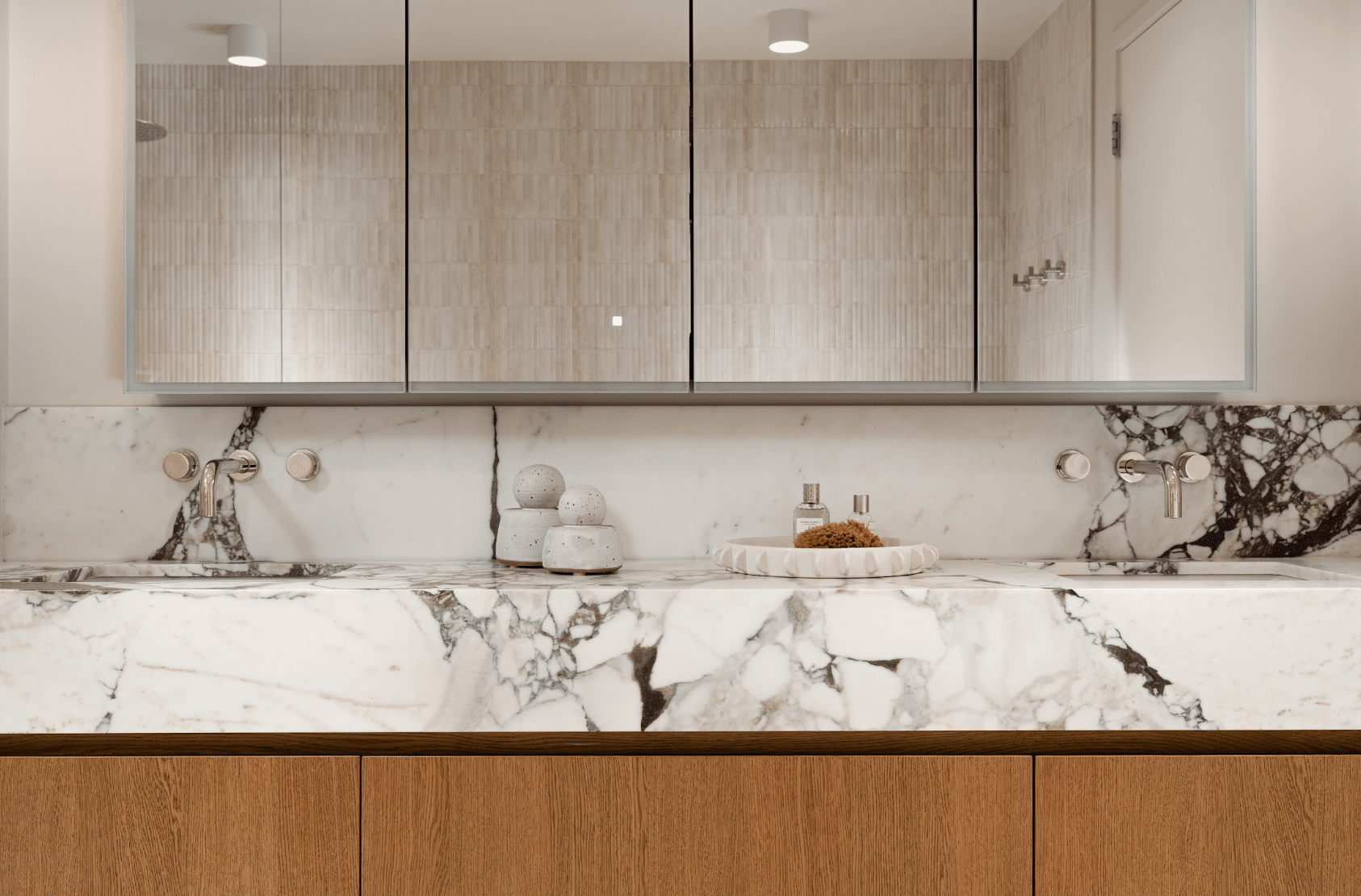
Whether you’re an avid HGTV watcher or someone who follows interior design trends, you’re bound to have heard about—and seen—the increase in porcelain use in the home.
Yes, we’ve had porcelain tile for years.
And porcelain dishes and figurines for centuries.
But it’s only recently that large-format tiles and full-size slabs have become available for interior design applications.
Maybe you’ve heard that porcelain is expensive.
Or hard to work with.
Both can be true to an extent.
So, let’s look at both the pros and cons of porcelain in interior design applications.

Pros
1. Durability
- High resistance: Porcelain is extremely durable and resistant to scratches, chips, and cracks. It’s also resistant to high temperatures, making it ideal for kitchen use.
- Stain resistance: Porcelain is nonporous, which means it resists staining from common kitchen substances such as wine, coffee, and oils.
2. Low Maintenance
- Easy to clean: Use something pH-neutral if you don’t want to use soap and water. I find the soap-and-water approach unappealing because it involves too many steps. I just want to spray and wipe for everyday cleaning. Windex is a bit harsh. So are plant- and oil-based soaps, which can leave a film.
3. Aesthetics
- It can produce a consistent look because it’s a manufactured stone. If that’s what you’re looking for, it’s great for that. I prefer the variation and uniqueness of natural stone for my own home. You decide what’s best for you and your lifestyle.
4. Environmental Impact
Porcelain is often made from natural, abundant materials and can be recycled. Its production process can be more environmentally friendly than that of other manufactured countertop materials.

Cons
1. Cost
- Expensive: High-quality porcelain countertops can be quite expensive in terms of both material and installation costs. Fabrication contributes the most to the cost because porcelain takes so long to cut and must be handled by well-trained professionals. If you’re using “Chuck with a Truck,” he’s not going to be cutting your porcelain countertops. He doesn’t have the right equipment or the skill level to handle it.
2. Installation Challenges
- Professional installation required: To reinforce this point, installing porcelain countertops requires specialized skills and tools. Improper installation can lead to issues such as cracking. Porcelain also takes four times longer to cut than quartz.
3. Potential for Damage
- Chipping: Although porcelain is durable, its edges can be prone to chipping, especially if heavy objects are dropped on them.
- Impact damage: While resistant to scratches, porcelain can crack or break under severe impact—which is true of almost any object or human!
4. Limited Edge Profiles
- Design limitations: Porcelain slabs are generally thinner than other countertop materials, which can limit the types of edge profiles and designs available.
If you have any other questions about porcelain or any kind of stone, please reach out to our super-helpful team at Precision. We’re here for you!