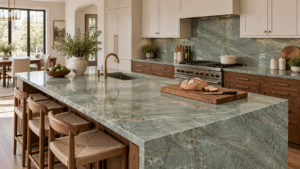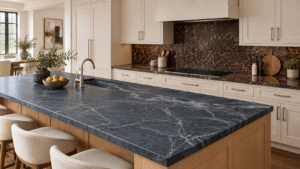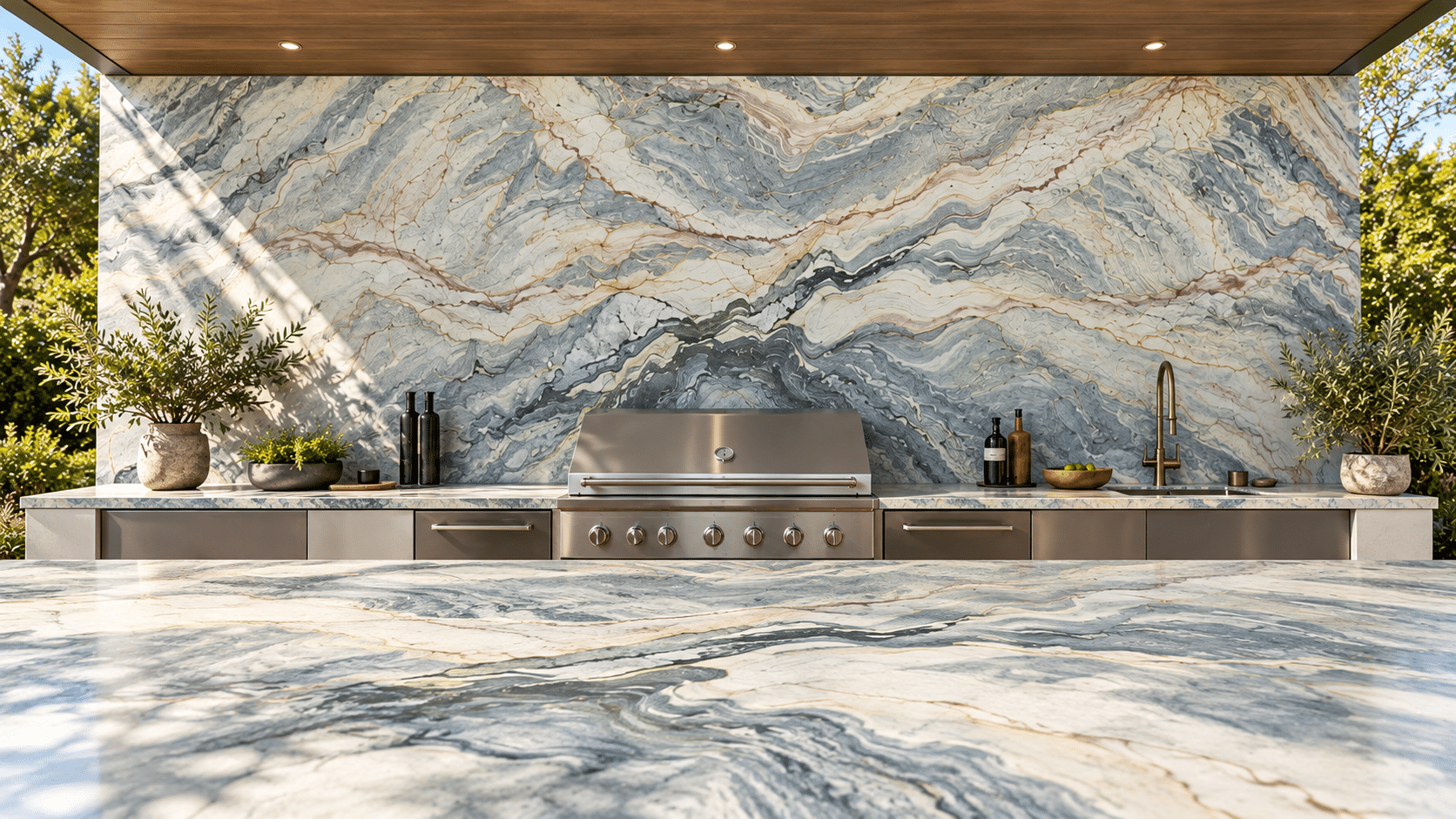
Quartzite outdoor countertops can bring the movement you love indoors to a kitchen designed for open air. The right slab must suit the exposure, including any resin or filler applied at the stone plant.
For a Chicagoland project, that review also needs to account for freezing weather and how the countertop will be supported. Start with those details before approving the stone. You can then plan a surface that belongs with the design and has clear care requirements from the outset.
Quartzite Outdoor Countertops Start With the Right Slab
Quartzite has the depth and movement to hold its own beside brick or stone paving. A broad vein can give a long serving counter direction, while quieter tones can let the surrounding materials lead.
Its quartz-rich structure also gives genuine quartzite strong resistance to everyday scratching. Our guide to quartzite hardness explains why that matters and where the limits remain.
Outdoor use requires a closer look at the slab and its treatments.
Natural stone may contain resin added to fill small pits or fissures. Some treatments can change color in sunlight, even when the stone itself holds up well. Arizona Tile’s exterior stone guidance explains how resin and minerals that oxidize can affect a stone’s use outdoors.
Ask about the slab’s treatment history and the supplier’s guidance for outdoor use. Confirm the finish too, especially if you are considering a different finish from the one shown in a sample.
Quartzite also differs from engineered quartz. We do not recommend engineered quartz outdoors because UV exposure can yellow or discolor its resin binders. Standard indoor-product warranties should not be assumed to cover exterior use.
A material name helps build the shortlist. The stone and its treatments tell you which slab belongs in your outdoor plan.
Check Sun Exposure and Chicago Winters
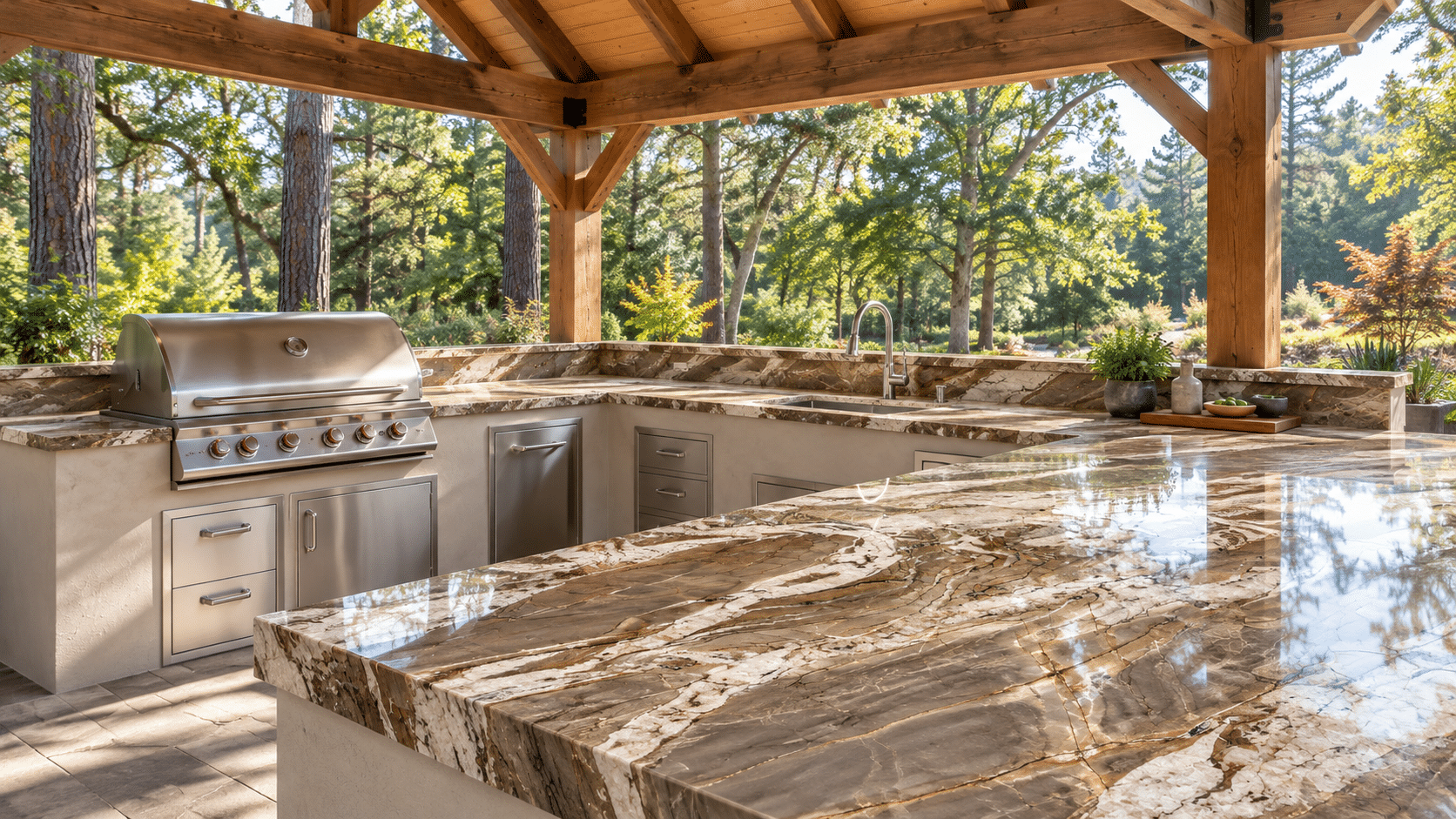
An uncovered counter faces different conditions from one sheltered beneath a roof. Both remain outdoor surfaces, so review their weather exposure even when the roof offers shade.
Start with where the weather reaches the stone.
Direct sun heats the surface and exposes any treatments to UV light. Rain and melting snow can collect near joints or low areas. A roof may reduce exposure, but wind-driven moisture can still reach the counter.
For Chicago winters, the team also needs to review freezing moisture and repeated temperature changes. The Natural Stone Institute identifies these exposures as concerns when choosing the stone and the systems used to fit it.
Discuss these conditions before you reserve a slab:
- Sun: Which sections receive prolonged direct light?
- Shelter: How much rain or snow can reach the surface?
- Water: Where could moisture collect around joints or openings?
- Winter: Is the selected stone and installation approach suitable for freezing exposure?
Sealing addresses a different part of the care plan. The right penetrating sealer slows the way liquids soak in and helps reduce stains from spills. It does not turn an unsuitable slab into a weatherproof surface.
Resealing needs depend on the stone and the product used, as well as the site conditions. Follow guidance for the selected surface instead of assuming an annual coat is always enough or always necessary.
Ask about winter care at the same time. You should know how to clean the stone and manage moisture before the first winter arrives.
Plan the Countertop Around the Grill and the Base
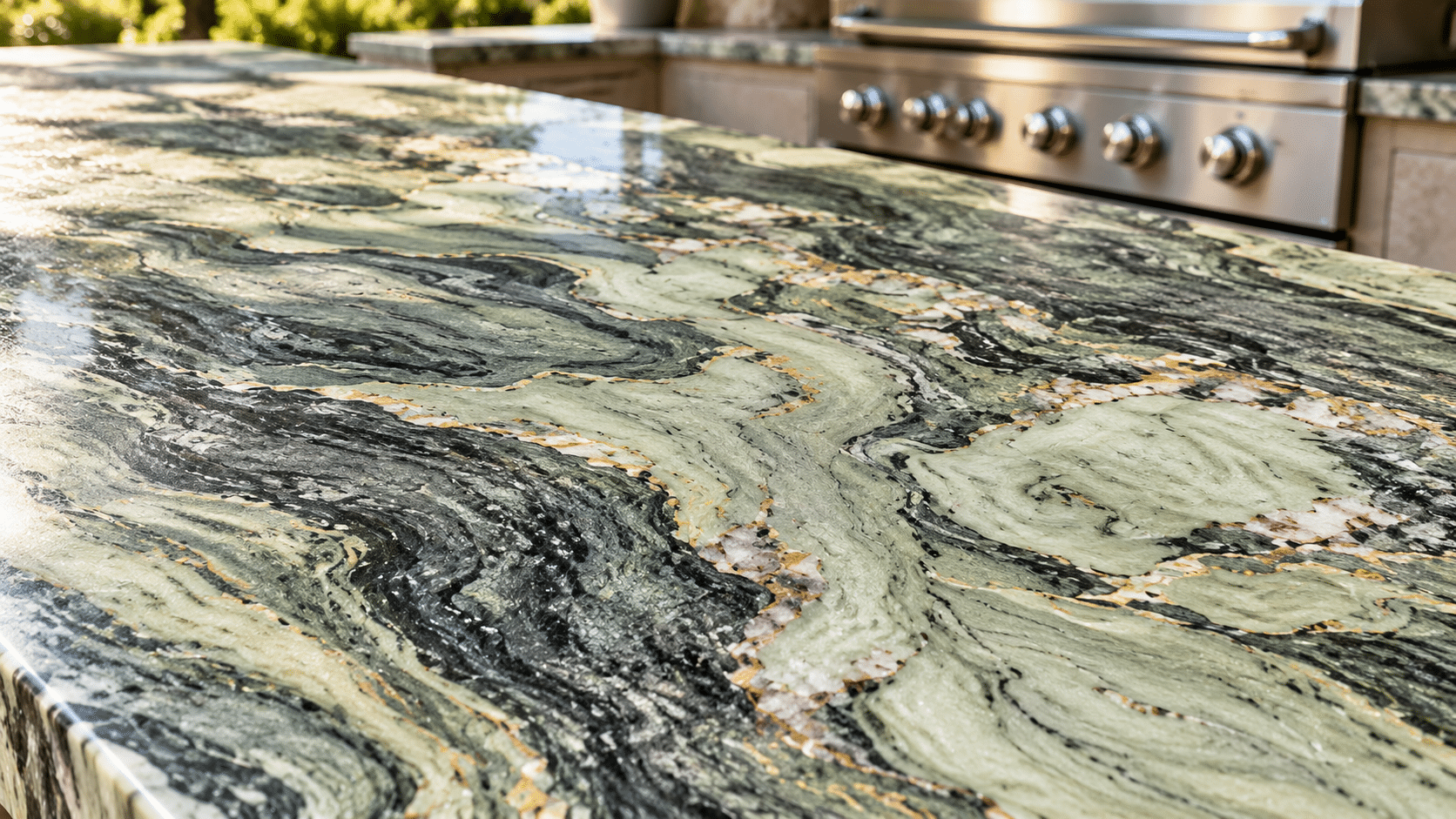
The countertop plan should begin with the appliances and the structure beneath it. A grill opening changes where stone remains, while a seating overhang changes the support needed below.
Those details affect how we cut the stone and how the surface will look.
Confirm the grill model before finalizing its cutout. Follow the grill maker’s instructions for its enclosure and the space required around it. Quartzite’s heat tolerance does not replace those requirements or make every joint and treatment heat-resistant.
Keep a trivet near the cooking area for hot cookware. That simple habit protects the installed surface without making outdoor meals more complicated.
The base also needs to be ready for the stone. Discuss stability and support with the project team, with a close look at the areas around sinks and grill openings. Have the project team review long overhangs before the stone reaches the shop.
Then consider the view from the seating area. A strong vein may suit the broad serving surface but disappear at a grill opening. Our digital layout review lets you see the chosen slab mapped onto the measured pieces before cutting.
If the preferred quartzite does not suit the exposure, compare exterior-suitable quartzite, granite, or porcelain selections. The practical tradeoffs of porcelain are worth understanding, including its edge and installation requirements.
Resolve the support details while you can still adjust the layout. You should not have to discover a conflict between the seating area and the base after cutting.
Bring the Outdoor Plan Into the Stone Conversation Early
Quartzite gives a broad outdoor serving counter a pattern formed in the stone itself. Start by confirming the selection’s fitness for outdoor use, then review how the surface will be built.
Bring drawings and site photos to Precision Stone Design in Elk Grove Village for your Chicagoland project. Include the grill model and any base or support details already developed. Tell us which areas are covered and where the countertop receives direct sun.
We can review the stone and fabrication details alongside that plan, while the wider project team handles the base and appliance needs.
Request a private consultation to review quartzite for your outdoor kitchen plans.
Frequently Asked Questions
Can Quartzite Be Used in an Uncovered Outdoor Kitchen?
Yes, when the selected slab and the installation suit direct sun and weather. Confirm the supplier’s guidance for the slab, including any resin or filler added at the stone plant. Those treatments may respond differently to sunlight than the minerals themselves.
An uncovered surface also needs a plan for moisture and seasonal changes. Ask about joints and support before fabrication, then obtain care advice for the finished countertop. An outdoor-use label helps narrow the choice. You still need to check the slab and the site conditions.
Does Outdoor Quartzite Need Sealing Every Year?
There is no required yearly schedule for every slab. Some quartzite takes in liquid more readily than other stone. The sealer and the weather also affect how you check its care needs.
Follow the guidance for your stone rather than adding sealer on a fixed date. If the appearance changes, identify the cause before treating it. A darkened area may need a closer check for moisture or a film on the surface. More sealer will not correct every mark or make a slab suitable for outdoor use.
Can Quartzite Stay Outside Through a Chicago Winter?
Quartzite selected and installed for freezing exposure can stay outdoors through winter. Confirm this for the slab and the way it will be fitted, rather than relying on quartzite’s hardness.
Review moisture exposure, joints, and support with the project team before approving fabrication. The care plan should explain how to keep the surface clean and manage seasonal conditions. Do not assume that a cover or an extra coat of sealer resolves every concern. Both the material and the way it is installed need to suit the site.
Is Quartzite or Granite Better for Outdoor Countertops?
Both can work well when the stone and its treatments suit the site. Quartzite often appeals for broad movement and pale tones, while granite offers a different range of mineral patterns and colors.
Compare the slabs beside the other finishes, then review their care needs and the work required to fit them. Do not choose solely from a generic durability ranking. Choose a slab that suits the site and works with the grill layout. Settle the support details before the stone reaches the shop.